
Curcumin (turmeric color, E100)
Updated November 9, 2026
Curcumin (E100) is the yellow pigment of turmeric, used to colour mustard, cheese, drinks, confectionery and baked goods. One oddity comes first: no US regulation uses the word "curcumin" at all — the colour is authorised as "turmeric," the ground rhizome of Curcuma longa, and as "turmeric oleoresin," a solvent extract, and that is what American labels say. Both EFSA and the WHO/FAO expert committee put the acceptable daily intake at 3 mg per kilogram of body weight per day. The reason this page is not rated low is EFSA's own exposure estimate: at maximum permitted levels, children aged 1 to 10 can exceed that figure — while curcumin from an ordinary diet amounts to less than 7 percent of it.
Quick facts
- Also known as
- Turmeric (color), Turmeric extract, E100
- E-number
- E100
- Function
- Colors
- US status
- No US regulation uses the word "curcumin". The colour is authorised as turmeric (21 CFR 73.600) and turmeric oleoresin (21 CFR 73.615), both exempt from certification and used in amounts consistent with good manufacturing practice
- EU status
- Permitted as E100 with an ADI of 3 mg/kg body weight per day (EFSA, 2010), which EFSA found children aged 1–10 could exceed at maximum levels of use
- Acceptable daily intake
- 3 mg/kg body weight per day (EFSA, 2010), from a NOAEL of 250–320 mg/kg body weight per day with an uncertainty factor of 100. JECFA set 0–3 mg/kg body weight in 2003
- Found in
- 12,829 products (2,933 sold in the US)
- Foodmetria concern level
- Moderate concern How we rate additives
What is Curcumin?
Curcumin is the dicinnamoylmethane dye that makes turmeric yellow — CAS number 458-37-7, international number INS 100i, historically catalogued as C.I. Natural Yellow 3 and sometimes called diferuloylmethane.
In Europe and the UK the additive is E100, "curcumin." In the United States it is not. The word "curcumin" appears nowhere in the US colour additive regulations, which instead authorise two related things:
- Turmeric (21 CFR 73.600) — defined simply as "the ground rhizome of Curcuma longa L." The regulation names no solvent and no process. It is the spice.
- Turmeric oleoresin (21 CFR 73.615) — "the combination of flavor and color principles obtained from turmeric (Curcuma longa L.) by extraction," using any of eight named solvents: acetone, ethyl alcohol, ethylene dichloride, hexane, isopropyl alcohol, methyl alcohol, methylene chloride and trichloroethylene. Residual solvent is capped at the levels permitted for the same solvents in spice oleoresins.
That difference matters when reading a label. A US ingredient list will say "turmeric" or "turmeric oleoresin"; a European one may say "curcumin" or "E100". The oleoresin definition also makes a point the name hides: it is "the combination of flavor and color principles," so it is not a pure pigment — it brings turmeric's taste with it, which is part of why it suits mustard and curry products and not everything.
Both US entries are exempt from certification: FDA considers batch certification "not necessary for the protection of the public health."
Why is Curcumin used in food?
Yellow, and a warm yellow. Curcumin covers the range from pale lemon to deep gold, which is why it turns up in prepared mustard, cheese and processed cheese, butter and margarine, pickles and relishes, soups and sauces, snack seasonings, confectionery, baked goods and some drinks. It is one of the obvious replacements being reached for as US manufacturers move away from petroleum-based dyes, since it can do part of the work of Yellow 5 and Yellow 6.
Permitted broadly in the US, with one exception. Both turmeric and turmeric oleoresin "may be safely used for the coloring of foods generally, in amounts consistent with good manufacturing practice," with the standard exception that they may not colour foods for which a standard of identity exists unless that standard authorises added colour. There are no numerical limits in either regulation.
Flavour comes with it. Because turmeric oleoresin is defined as carrying flavour as well as colour principles, it is chosen where the taste is welcome or at least unobjectionable. Purified curcumin preparations exist for applications where it is not, but the US regulation does not describe them.
It is not very stable. This is the practical reason it does not simply replace synthetic dyes everywhere. Nothing in the regulations addresses stability, so this page makes no claims about it beyond noting that US rules set no limits and leave the choice to good manufacturing practice.
Is Curcumin safe? What the research says
The limit, and how it got there. Both committees agree on the number, and the history of that number is the most encouraging thing on this page. The WHO/FAO expert committee first looked at curcumin in 1969 and allocated no ADI at all. From 1974 through 1992 it carried a series of temporary figures of 0–0.1 mg/kg body weight; in 1995 and again in 2001 the temporary figure rose to 0–1 mg/kg; and in 2003 it became a full ADI of 0–3 mg/kg body weight, based on a no-effect level of 250–320 mg/kg body weight per day in a rat multigeneration study with a safety factor of 100. EFSA re-evaluated curcumin in 2010 and reached the same place independently: "the present database supports an ADI of 3 mg/kg bw/day based on the NOAEL of 250-320 mg/kg bw/day," the endpoint being decreased body weight gain in the second generation, with an uncertainty factor of 100. Thirty years of temporary limits became a permanent one not because views softened but because the studies arrived.
For a sense of scale, 3 mg/kg is about 210 mg a day for a 70 kg adult and 90 mg for a 30 kg child.
On cancer, the Panel was clear. EFSA noted that in the US National Toxicology Program studies in rats and mice the significant findings were benign adenomas rather than carcinomas, and were not dose-dependent, and it "agreed with JECFA that curcumin is not carcinogenic."
Why this page is rated moderate: children's exposure. In the same 2010 opinion EFSA estimated intakes and found that for children aged 1 to 10, both mean and high-percentile (95th) estimates were above the ADI at maximum levels of use, in some European countries. That is the conservative scenario — it assumes every product uses the maximum permitted amount — and EFSA put the counterweight in the same breath: "intake of curcumin from the normal diet amounts to less than 7% of the ADI." Both halves belong on the page. The exceedance is real and is the reason for the rating; the ordinary-diet figure is the reason the rating is not higher.
The liver reports, and what they are actually about. Since 2010 the live question has moved from the colour to the supplement, and the clearest regulator statement on it is from the UK Committee on Toxicity, which published a statement on turmeric and curcumin supplements in December 2024. Its framing is exactly the distinction this page needs: use "from its use as a food additive or as a spice generally leads to exposures that are within the dietary ADI," while exceedances come from consumption "in high quantities such as for its purported health benefits, or via the intake of supplements." Of 15 supplements surveyed, two would take a person above the ADI if the label dosage were followed; where label guidance is followed, the committee judged that "there may be minor exceedances of the dietary ADI, but this should not pose a significant risk to the population."
On the hepatotoxicity reports themselves the committee's conclusions were careful and worth reading in its own words. It found that "there is reasonable evidence for a link to turmeric consumption," that "the effects occurred upon challenge and were reversed after withdrawal," and that "the signs are consistent with an idiosyncratic reaction" — meaning an unpredictable individual response rather than a dose-dependent toxicity. It considered a contaminant such as heavy metals an unlikely explanation. Its central caution is that "in rare individuals, consumption of turmeric at the levels found in supplements, even at low concentrations" may pose a risk to the liver through such a response, and that "the individual would not know they are susceptible before taking a supplement" — genetic markers such as HLA-B*35:01 were named as an example. Substantial exceedances of the ADI it treated as "a potential health risk to humans," especially where other medicines are being taken at the same time or where hepato-biliary function is already altered. It also flagged newer micellar, nano- and micro-formulations as "an area of particular concern," and noted that ten of the fifteen surveyed supplements contained piperine, six of them above one percent.
None of that is about the yellow in mustard. It is about capsules taken deliberately in the belief they are medicinal, and this page reports it because people searching for curcumin will have read about it — not because a colour additive carries that risk.
Curcumin regulation: US vs EU
| Region | Status |
|---|---|
| United States — turmeric | Color additive listed at 21 CFR 73.600 as "the ground rhizome of Curcuma longa L.", permitted for coloring foods generally in amounts consistent with good manufacturing practice, exempt from batch certification. No numerical limits. |
| United States — turmeric oleoresin | Color additive listed at 21 CFR 73.615 as the combination of flavor and color principles extracted with any of eight named solvents, with residual solvent limited to the levels permitted for spice oleoresins; same use conditions and certification exemption as turmeric. |
| United States — the word "curcumin" | Does not appear in either regulation, and we found no separate US color additive listing for curcumin as such. |
| European Union | Permitted as E100 (curcumin) with an ADI of 3 mg/kg body weight per day (EFSA, 2010). EFSA found children aged 1–10 could exceed the ADI at maximum levels of use in some countries. |
| United Kingdom | Permitted as E100, listed as "Curcumin" under colours. |
| JECFA (WHO/FAO) | ADI 0–3 mg/kg body weight, allocated in 2003 from a no-effect level of 250–320 mg/kg body weight per day with a safety factor of 100, after temporary ADIs dating back to 1974. |
| US states | Not named in Texas SB 25 or Louisiana SB 14. Both cover FDA-certified food colors as a category, and turmeric is exempt from certification. |
Permitted everywhere we checked, with no ban, phase-out or state restriction. The regulatory curiosity is the naming, not the status.
- United States. No regulation for "curcumin." Authorised instead as turmeric (21 CFR 73.600), "the ground rhizome of Curcuma longa L.", and turmeric oleoresin (21 CFR 73.615), a solvent extract carrying both flavour and colour principles, with residual solvents limited to the levels allowed for spice oleoresins. Both are permitted for colouring foods generally in amounts consistent with good manufacturing practice, both are exempt from batch certification, and neither may colour a standardised food unless that standard authorises added colour.
- European Union and United Kingdom. Permitted as E100, "curcumin," with an ADI of 3 mg/kg body weight per day from EFSA's 2010 re-evaluation.
- JECFA. ADI 0–3 mg/kg body weight, set in 2003 after three decades of temporary values.
- FDA post-market review. Neither curcumin nor turmeric is on FDA's list of chemicals under review, whose table carries an "as of May 12, 2026" date on a page last updated in October 2026.
- US state laws. Not named in Texas SB 25 or Louisiana SB 14, the warning-label laws signed in June 2025. Both lists include a general entry for FDA-certified food colors, and turmeric is exempt from certification, so that entry does not reach it.
The most likely future change to this page is a new European exposure assessment, since EFSA's figures date from 2010 and curcumin's use is growing as manufacturers replace synthetic dyes.
Who should limit or avoid Curcumin?
- Anyone taking turmeric or curcumin supplements. This is where the documented risk sits. The UK Committee on Toxicity found reasonable evidence linking reported liver injury to turmeric consumption at supplement levels, described the reaction as idiosyncratic — unpredictable, not dose-driven — and noted that a susceptible person has no way of knowing in advance. Two of fifteen surveyed supplements would exceed the ADI at their own label dose. Newer "high-absorption" micellar and nano formulations were singled out as needing further assessment.
- People taking other medicines, or with liver or biliary problems. The same committee flagged substantial exceedances of the ADI as a potential risk "especially if other medicines are being taken concomitantly" and "for individuals with altered hepato-biliary function." A conversation with a doctor or pharmacist is worth more here than an ingredient list.
- Parents of young children. EFSA's 2010 estimate put children aged 1 to 10 above the ADI at maximum levels of use. That is a worst-case modelling scenario rather than a measurement of what any child eats, and the ordinary diet contributes less than 7 percent of the ADI — but it is the reason this page is rated moderate rather than low.
- People avoiding synthetic dyes. Curcumin is one of the colours being used to replace them, so if you are reading labels for Yellow 5 and Yellow 6, expect to see more turmeric and turmeric oleoresin.
- Vegans, and people keeping halal or kosher. The US definitions are a ground plant rhizome and a solvent extract of it. There is no animal step in either.
- People who dislike the taste of turmeric. Worth knowing that turmeric oleoresin is defined in US law as carrying flavour as well as colour, so it is not a neutral yellow.
Foods that commonly contain Curcumin
Share of published products in each category whose ingredient list includes Curcumin.
Popular products with Curcumin
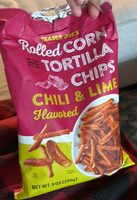 c NOVA 4
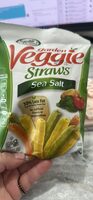 c NOVA 4
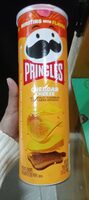 e NOVA 4
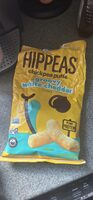 NOVA 4
 d NOVA 4
 a NOVA 4
 c NOVA 4
 d NOVA 4
 d NOVA 4
 NOVA 4
Curcumin-free alternatives
Popular products from the same categories that don't list Curcumin and score Nutri-Score A–C.
 a NOVA 4
 a NOVA 4
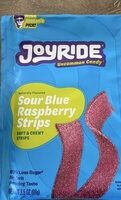 a NOVA 4
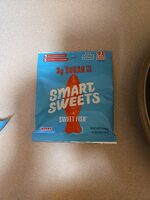 b NOVA 4
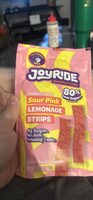 c NOVA 4
How to spot Curcumin on a label
Look for any of these names in the ingredient list:
Related additives
Frequently asked questions
Is curcumin bad for you?
As a food colour, regulators are relaxed about it: both EFSA and the WHO/FAO expert committee set an acceptable daily intake of 3 mg per kilogram of body weight per day, and EFSA agreed that curcumin is not carcinogenic. Two things keep this page from a low rating. EFSA estimated that children aged 1 to 10 could exceed the ADI at maximum permitted levels of use, and the UK Committee on Toxicity has found reasonable evidence linking reported liver injury to turmeric at supplement levels. The second is about capsules, not about coloured food.
Why does my US label say turmeric instead of curcumin?
Because US regulation has no entry for curcumin. The colour is authorised as "turmeric," defined as the ground rhizome of Curcuma longa L., and as "turmeric oleoresin," a solvent extract of it. Those are the names the rules use, so those are the names on the label. In the EU and UK the same pigment is E100, "curcumin."
Is E100 the same as the turmeric in my spice rack?
Closely related, not identical. US law treats the ground spice itself as a permitted colour additive, and separately permits turmeric oleoresin, which is extracted with solvents and defined as carrying both flavour and colour principles. E100 in Europe refers to the curcumin pigment. So the spice, the extract and the isolated pigment are three different things that all end up making food yellow.
Can turmeric or curcumin harm your liver?
The UK Committee on Toxicity examined the reported cases in 2024 and concluded there is "reasonable evidence for a link to turmeric consumption," with effects that appeared on exposure and reversed on withdrawal and signs "consistent with an idiosyncratic reaction" — an unpredictable individual response rather than a dose-dependent poisoning. It judged a contaminant an unlikely cause, said the risk applies to rare individuals at supplement levels, and noted that a susceptible person could not know in advance. It also said that additive and spice use generally stays within the ADI. If you take supplements, particularly alongside other medicines, this is worth discussing with a doctor; this page is not medical advice.
How much curcumin is within the limit?
The ADI of 3 mg per kilogram of body weight works out to about 210 mg a day for a 70 kg adult and about 90 mg for a 30 kg child. For comparison, EFSA calculated that curcumin from a normal diet amounts to less than 7 percent of the ADI — the exceedances it found were in a modelled scenario where products use the maximum permitted levels, and in supplements, two of fifteen of which the UK committee found would exceed the ADI at their own label dose.
Is curcumin vegan and gluten-free?
Yes. The US definitions are a ground plant rhizome and a solvent extract of that rhizome; there is no animal step and no cereal step in either. Turmeric oleoresin carries residual solvents only within the limits set for spice oleoresins.
What foods contain curcumin or turmeric colour?
Prepared mustard, cheese and processed cheese, butter and margarine, pickles and relishes, soups, sauces and seasoning blends, confectionery, baked goods, and an increasing number of products reformulated away from synthetic yellow dyes. See the products and categories above for what is in our database.
Sources & references
- 21 CFR 73.600 — Turmeric (color additive exempt from certification)
- 21 CFR 73.615 — Turmeric oleoresin
- EFSA (2010) — Scientific Opinion on the re-evaluation of curcumin (E 100) as a food additive
- JECFA (WHO database) — Curcumin, INS 100i: ADI 0–3 mg/kg bw (2003)
- JECFA (INCHEM) — Curcumin evaluations, including the temporary ADIs from 1974 onwards
- UK Committee on Toxicity (2024) — Statement on the potential risk to human health of turmeric and curcumin supplements, COT/2024/07
- UK Government — Approved additives and E numbers
- U.S. FDA — List of Select Chemicals in the Food Supply Under FDA Review
Product data: Open Food Facts (ODbL), updated daily. Additive information is for general education and is not medical advice. Always check the package label. Our methodology.