
Whey vs Gold Standard 100% Whey Double Rich Chocolate
Overall, Whey has the better nutritional profile on the measures we compare. It wins on 3 of our comparison points versus 0.
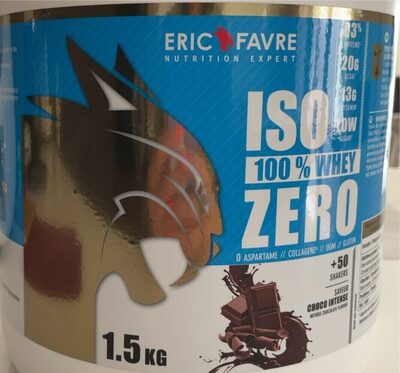
Whey
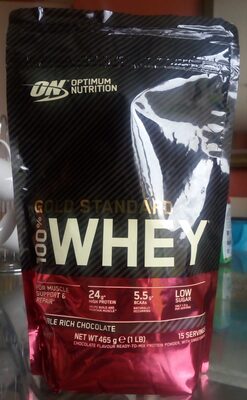
Gold Standard 100% Whey Double Rich Chocolate
Nutrition per 100 g
| Nutrient | Whey | Gold Standard 100% Whey Doub... |
|---|---|---|
| Nutri-Score | a | — |
| NOVA group | 4 | 4 |
| Calories | 353 kcal | 374 kcal |
| Fat | 1.4 g | 4.5 g |
| Saturated fat | 0.8 g | 1.6 g |
| Sugars | 1.5 g | 3.2 g |
| Salt | 0.6 g | 0.5 g |
| Fiber | — | 2.3 g |
| Protein | 83.3 g | 77.4 g |
| Additives | 2 | 5 |
| Allergens | Celery, Eggs, Fish, Milk, Nuts, Peanuts | Milk, Soybeans |
Green = better value for that nutrient (less sugar, fat, salt and calories; more fiber and protein).
Key differences
- Whey has 69% less fat (1.4 g vs 4.5 g).
- Whey has 50% less saturated fat (0.8 g vs 1.6 g).
- Whey has 54% less sugar (1.5 g vs 3.2 g).
- Only Whey lists: Celery, Eggs, Fish, Nuts, Peanuts.
- Only Gold Standard 100% Whey Double Rich Chocolate lists: Soybeans.
Ingredients
Whey
Whey protein isolate (wh emulsifier: sunflower lecithi (milk) (90.6%); coc flavor(3.2%); emulsifi carboxymethylcellulose; sa thickener: guar gum, xanth gum; sweeteners: sucralo acesulfame k Produced in a facility that Produit dans un atelier qui utilise du gluten, des œufs, des graines processes gluten, eggs, sesa de sésame, des noix, du céleri, des seeds, nuts, celery, sulphit sulfites, du poisson, des arachides, fish, peanuts and soya du soja, des fruits à coques. Informations nutritionnelles
Gold Standard 100% Whey Double Rich Chocolate
_Whey_ Protein Blend (93%) [_Milk] (_Whey_ Protein Isolate, _Whey_ Protein Concentrate, Hydrolysed _Whey_ Protein Isolate, Emulsifier: _Soy_ Lecithin). Fat-Reduced Cocoa Powder, Flavourings, Thickener (Xanthan Gum), Sweeteners (Sucralose, Acesulfame K).
FAQ
Which is healthier: Whey or Gold Standard 100% Whey Double Rich Chocolate?
Overall, Whey has the better nutritional profile on the measures we compare. We compare Nutri-Score, processing level and seven nutrients per 100 g. Your own needs (for example low sugar or high protein) may make a different choice better for you.
Which has fewer calories?
Whey has fewer calories: 353 kcal versus 374 kcal per 100 g.
Which has less sugar?
Whey has less sugar: 1.5 g versus 3.2 g per 100 g.