
Sea Salt Dark Chocolate vs Himalayan
Overall, Himalayan has the better nutritional profile on the measures we compare. It wins on 6 of our comparison points versus 3.
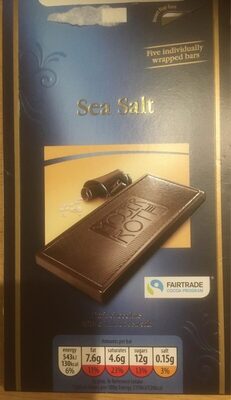
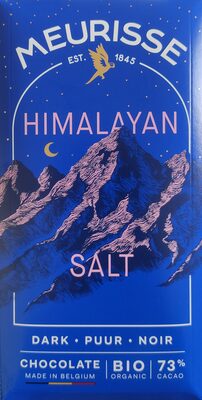
Nutrition per 100 g
| Nutrient | Sea Salt Dark Chocolate | Himalayan |
|---|---|---|
| Nutri-Score | e | c |
| NOVA group | 4 | 3 |
| Calories | 552 kcal | 587 kcal |
| Fat | 33.6 g | 44 g |
| Saturated fat | 20.3 g | 0 g |
| Sugars | 46.2 g | 0 g |
| Salt | 0.1 g | 0.5 g |
| Fiber | 5.2 g | 0 g |
| Protein | 5.5 g | 8 g |
| Additives | 1 | 0 |
| Allergens | Soybeans | Nuts |
Green = better value for that nutrient (less sugar, fat, salt and calories; more fiber and protein).
Key differences
- Sea Salt Dark Chocolate has 24% less fat (33.6 g vs 44 g).
- Himalayan has no saturated fat, while Sea Salt Dark Chocolate has 20.3 g.
- Himalayan has no sugar, while Sea Salt Dark Chocolate has 46.2 g.
- Sea Salt Dark Chocolate has 84% less salt (0.1 g vs 0.5 g).
- Sea Salt Dark Chocolate has 100% more fiber (5.2 g vs 0 g).
- Himalayan has 31% more protein (8 g vs 5.5 g).
- Himalayan has the better Nutri-Score.
- Himalayan is less processed (lower NOVA group).
- Only Sea Salt Dark Chocolate lists: Soybeans.
- Only Himalayan lists: Nuts.
Ingredients
Sea Salt Dark Chocolate
sugar, cocoa mass, cocoa butter, emulsifier: lecithins (soya), sea salt (0,5%), vanilla extract, dark chocolate contains cocoa solids 52% minimum, allergy advice: for allergens, see ingredients in bold, may contain peanuts, nuts and milk
Himalayan
Pâte de cacao, sucre de canne, beurre de cacao, poudre de vanille naturelle, sel.
FAQ
Which is healthier: Sea Salt Dark Chocolate or Himalayan?
Overall, Himalayan has the better nutritional profile on the measures we compare. We compare Nutri-Score, processing level and seven nutrients per 100 g. Your own needs (for example low sugar or high protein) may make a different choice better for you.
Which has fewer calories?
Sea Salt Dark Chocolate has fewer calories: 552 kcal versus 587 kcal per 100 g.
Which has less sugar?
Himalayan has less sugar: 0 g versus 46.2 g per 100 g.