
Long Grain vs Special Lime & Coriander Rice
Overall, Long Grain has the better nutritional profile on the measures we compare. It wins on 3 of our comparison points versus 1.
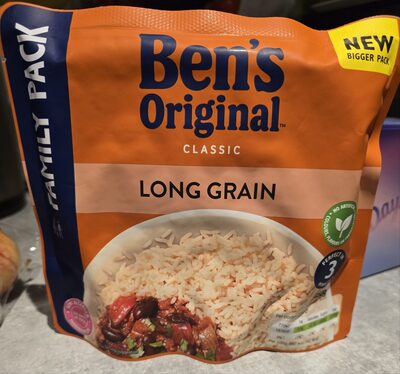
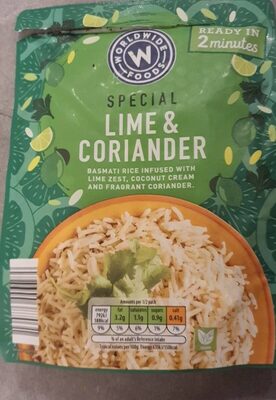
Nutrition per 100 g
| Nutrient | Long Grain | Special Lime & Coriander Ric... |
|---|---|---|
| Nutri-Score | b | b |
| NOVA group | — | 4 |
| Calories | 162 kcal | 154 kcal |
| Fat | 0.5 g | 2.6 g |
| Saturated fat | 0.1 g | 0.9 g |
| Sugars | 0.5 g | 0.7 g |
| Salt | 0 g | 0.3 g |
| Fiber | 0.5 g | 2.5 g |
| Protein | 4 g | 3.8 g |
| Additives | 0 | 0 |
| Allergens | None listed | None listed |
Green = better value for that nutrient (less sugar, fat, salt and calories; more fiber and protein).
Key differences
- Long Grain has 80% less fat (0.5 g vs 2.6 g).
- Long Grain has 89% less saturated fat (0.1 g vs 0.9 g).
- Long Grain has 97% less salt (0 g vs 0.3 g).
- Special Lime & Coriander Rice has 80% more fiber (2.5 g vs 0.5 g).
Ingredients
Long Grain
Not available.
Special Lime & Coriander Rice
COOKED BASMATI RICE (92%) (Water, Basmati Rice), COCONUT CREAM (4%), Sunflower Oil, CORIANDER (1%), LIME ZEST (0.5%), Sugar, Makrut Lime Leaf, Salt, Ravouring. DIETARY ADVICE: Suitable for vegans No artificial colours, flavourings or preservatives. WK024010-3 STORAGE: Store in a cool, dry uncooked, refrigerate and cons Not suitable for freening Packaged in a protective atmosp C RECYCLE AT STORE Don't recycle at home 2 If you are not entirely satisfied with this p it to the store where it was purchased and to replace or refund it. This does not affect SPECIALLY P Aldi Stores Ltd Atherstone, W Aldi Stores (Ire ALDI PO Box 726, Na www.aldi.com
FAQ
Which is healthier: Long Grain or Special Lime & Coriander Rice?
Overall, Long Grain has the better nutritional profile on the measures we compare. We compare Nutri-Score, processing level and seven nutrients per 100 g. Your own needs (for example low sugar or high protein) may make a different choice better for you.
Which has fewer calories?
Special Lime & Coriander Rice has fewer calories: 154 kcal versus 162 kcal per 100 g.
Which has less sugar?
Long Grain has less sugar: 0.5 g versus 0.7 g per 100 g.