
Lait d'amande et châtaigne vs Nata Thai
Overall, Lait d'amande et châtaigne has the better nutritional profile on the measures we compare. It wins on 3 of our comparison points versus 2.
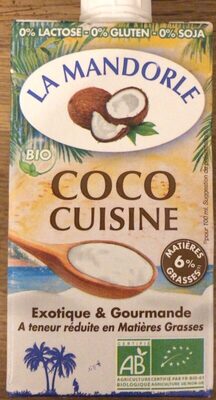
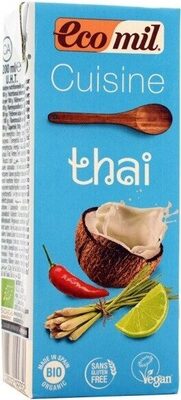
Nutrition per 100 g
| Nutrient | Lait d'amande et châtaigne | Nata Thai |
|---|---|---|
| Nutri-Score | c | c |
| NOVA group | 4 | 4 |
| Calories | 60 kcal | 127 kcal |
| Fat | 6 g | 12 g |
| Saturated fat | 5.5 g | 4 g |
| Sugars | 0.2 g | 3 g |
| Salt | 0 g | 0.2 g |
| Fiber | — | 0 g |
| Protein | 0.3 g | 1.3 g |
| Additives | 0 | 2 |
| Allergens | None listed | None listed |
Green = better value for that nutrient (less sugar, fat, salt and calories; more fiber and protein).
Key differences
- Lait d'amande et châtaigne has 53% fewer calories (60 kcal vs 127 kcal).
- Lait d'amande et châtaigne has 50% less fat (6 g vs 12 g).
- Nata Thai has 27% less saturated fat (4 g vs 5.5 g).
- Lait d'amande et châtaigne has 93% less sugar (0.2 g vs 3 g).
- Nata Thai has 77% more protein (1.3 g vs 0.3 g).
Ingredients
Lait d'amande et châtaigne
Amandes dégraissées partiellement 25% (Sicile ou Espagne), farine de châtaigne 25% (France ou Italie), sirop de riz déshydraté, farine de riz, fibre d'acacia, arôme naturel vanille.
Nata Thai
Lait de coco" (60%), eau, curry rouge" (sel marin, piment“ (0,2%), jus Concentré de citron vert (0,1%), citronnelle" (0,03%) et épices* (06%: al", gingembre", coriandre", poivre noir", paprika"), stabilisants (gomme xanthane, gomme guar), arôme naturel de coco", "Ingredients issus de l'agriculture biologique). Fabriqué dans une usine où sont également traités des fruits à coque.
FAQ
Which is healthier: Lait d'amande et châtaigne or Nata Thai?
Overall, Lait d'amande et châtaigne has the better nutritional profile on the measures we compare. We compare Nutri-Score, processing level and seven nutrients per 100 g. Your own needs (for example low sugar or high protein) may make a different choice better for you.
Which has fewer calories?
Lait d'amande et châtaigne has fewer calories: 60 kcal versus 127 kcal per 100 g.
Which has less sugar?
Lait d'amande et châtaigne has less sugar: 0.2 g versus 3 g per 100 g.