
Kitkat crunchy vs Kvikk Lunsj
Overall, Kitkat crunchy has the better nutritional profile on the measures we compare. It wins on 2 of our comparison points versus 1.
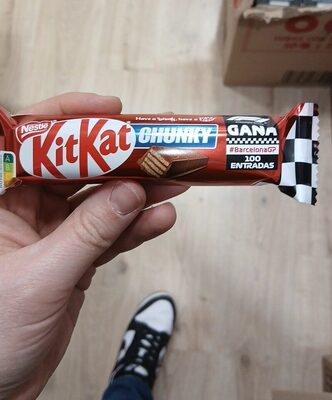
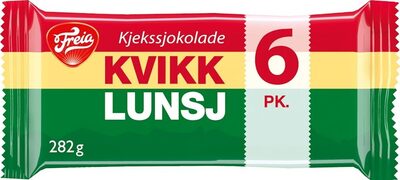
Nutrition per 100 g
| Nutrient | Kitkat crunchy | Kvikk Lunsj |
|---|---|---|
| Nutri-Score | e | e |
| NOVA group | 4 | — |
| Calories | 516 kcal | 538 kcal |
| Fat | 27 g | 30 g |
| Saturated fat | 15.1 g | 18 g |
| Sugars | 45.2 g | 46 g |
| Salt | 0.2 g | 0.3 g |
| Fiber | 2.3 g | 2.2 g |
| Protein | 6.5 g | 8.1 g |
| Additives | 2 | 1 |
| Allergens | Gluten, Milk | Gluten, Milk, Soybeans, May contain nuts. |
Green = better value for that nutrient (less sugar, fat, salt and calories; more fiber and protein).
Key differences
- Kitkat crunchy has 10% less fat (27 g vs 30 g).
- Kitkat crunchy has 16% less saturated fat (15.1 g vs 18 g).
- Kvikk Lunsj has 20% more protein (8.1 g vs 6.5 g).
- Only Kvikk Lunsj lists: Soybeans, May contain nuts..
Ingredients
Kitkat crunchy
Azúcar, harina de TRIGO, LECHE desnatada en polvo, grasas vegetales (palma, shea), manteca de cacao, pasta de cacao', jarabe de glucosa, suero de la LECHE filtrado en polvo, grasa LÁCTEA anhidra, cacao desgrasado en polvo', emulgente (lecitinas), gasificante (carbonatos de sodio). aroma natural. Puede contener CACAHUETES FRUTOS DE CASCARA. 'Rainforest Alliance Certified. Find out more at ra.org
Kvikk Lunsj
Sugar, milk powder, cocoa butter, wheat flour, cocoa mass, vegetable oils (shea, coconut), maize starch, emulsifier (soya lecithins), salt, flavouring, raising agent (E500). _May contain nuts._ Cocoa solids: 30 % minimum.
FAQ
Which is healthier: Kitkat crunchy or Kvikk Lunsj?
Overall, Kitkat crunchy has the better nutritional profile on the measures we compare. We compare Nutri-Score, processing level and seven nutrients per 100 g. Your own needs (for example low sugar or high protein) may make a different choice better for you.
Which has fewer calories?
Kitkat crunchy has fewer calories: 516 kcal versus 538 kcal per 100 g.
Which has less sugar?
Kitkat crunchy has less sugar: 45.2 g versus 46 g per 100 g.