
Cream Spread Herbs vs Philadelphia Plant Based
Neither product is clearly better overall — it depends on what matters most to you.
Nutrition per 100 g
| Nutrient | Cream Spread Herbs | Philadelphia Plant Based |
|---|---|---|
| Nutri-Score | d | d |
| NOVA group | 4 | 4 |
| Calories | 208 kcal | 220 kcal |
| Fat | 19 g | 21 g |
| Saturated fat | 13 g | 17 g |
| Sugars | 3.1 g | 0.8 g |
| Salt | 1.1 g | 0.8 g |
| Fiber | 0.4 g | 1.5 g |
| Protein | 5.6 g | 3.2 g |
| Additives | 3 | 1 |
| Allergens | Milk | Nuts |
Green = better value for that nutrient (less sugar, fat, salt and calories; more fiber and protein).
Key differences
- Cream Spread Herbs has 24% less saturated fat (13 g vs 17 g).
- Philadelphia Plant Based has 74% less sugar (0.8 g vs 3.1 g).
- Philadelphia Plant Based has 75% more fiber (1.5 g vs 0.4 g).
- Cream Spread Herbs has 43% more protein (5.6 g vs 3.2 g).
- Only Cream Spread Herbs lists: Milk.
- Only Philadelphia Plant Based lists: Nuts.
Ingredients
Cream Spread Herbs
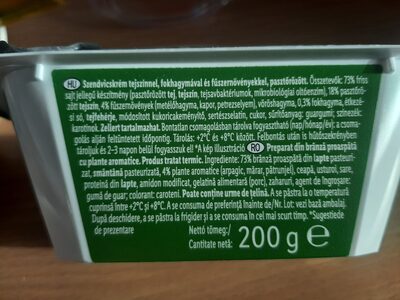
73% fresh cheese, 18% cream, 4% herbs (chives, dill, parsley), onion, garlic, table salt, milk proteins, modified starch, pork gelatin, sugar, thickener: guar gum; dye: carotene.
Philadelphia Plant Based
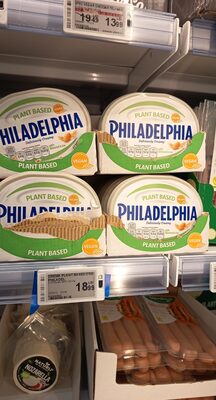
water, coconut oil, almond protein (6 %), oat flour (3%), salt, stabiliser (locust bean gum), vegan culture, may contain other nuts, gluten-free *iscc certified bio-based plastic, allocated via the mass balance approach, for more info scan qr supporting the bioeconomy iscc certified lid tub 7 622202 030635,quot,,gt, ondelēz international 3233678
FAQ
Which is healthier: Cream Spread Herbs or Philadelphia Plant Based?
Neither product is clearly better overall — it depends on what matters most to you. We compare Nutri-Score, processing level and seven nutrients per 100 g. Your own needs (for example low sugar or high protein) may make a different choice better for you.
Which has fewer calories?
Cream Spread Herbs has fewer calories: 208 kcal versus 220 kcal per 100 g.
Which has less sugar?
Philadelphia Plant Based has less sugar: 0.8 g versus 3.1 g per 100 g.