
Cheetos Puffs Cheese Pizza Flavored vs Cheez Doodles
Neither product is clearly better overall — it depends on what matters most to you.
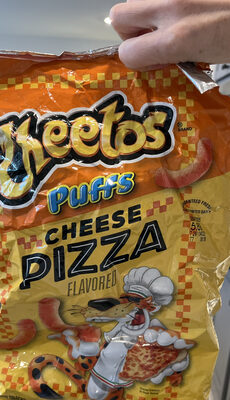
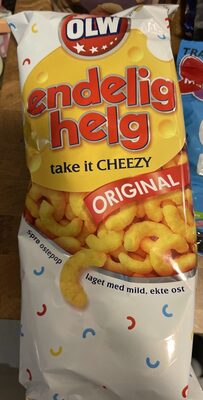
Nutrition per 100 g
| Nutrient | Cheetos Puffs Cheese Pizza F... | Cheez Doodles |
|---|---|---|
| Nutri-Score | d | e |
| NOVA group | 4 | 4 |
| Calories | 536 kcal | 530 kcal |
| Fat | 35.7 g | 30 g |
| Saturated fat | 5.4 g | 5.5 g |
| Sugars | 3.6 g | 2.5 g |
| Salt | 1.3 g | 2.1 g |
| Fiber | 1.8 g | — |
| Protein | 7.1 g | 10 g |
| Additives | 3 | 2 |
| Allergens | Milk | Milk |
Green = better value for that nutrient (less sugar, fat, salt and calories; more fiber and protein).
Key differences
- Cheez Doodles has 16% less fat (30 g vs 35.7 g).
- Cheez Doodles has 30% less sugar (2.5 g vs 3.6 g).
- Cheetos Puffs Cheese Pizza Flavored has 35% less salt (1.3 g vs 2.1 g).
- Cheez Doodles has 29% more protein (10 g vs 7.1 g).
- Cheetos Puffs Cheese Pizza Flavored has the better Nutri-Score.
Ingredients
Cheetos Puffs Cheese Pizza Flavored
ENRICHED CORN MEAL (CORN MEAL, FERROUS, SULFATE, NIACIN, THIAMIN MONONITRATE, RIBOFLAVIN, FOLIC, ACID), VEGETABLE OIL (CORN, CANOLA, AND/OR SUNFLOWER, OIL), AND LESS THAN 2% OF WHEY, CORN MALTODEXTRIN,, SALT,, MONOSODIUM GLUTAMATE, TOMATO POWDER, CHEDDAR, CHEESE (MILK, CHEESE CULTURES, SALT, ENZYMES), YEAST, EXTRACT, POTASSIUM SALT, SUGAR, GARLIC POWDER, REDUCED, MOZZARELLA CHEESE (MILK, CHEESE CULTURES, SALT,, ENZYMES), PARMESAN CHEESE (MILK, CHEESE CULTURES, SALT,, ENZYMES), DISODIUM GUANYLATE, AND DISODIUM INOSINATE.
Cheez Doodles
Maismel, solsikkeolje, ostepulver (ost, fargestoff (e 160a, e 160c)), melkepulver, salt, potetstivelse, druesukker.
FAQ
Which is healthier: Cheetos Puffs Cheese Pizza Flavored or Cheez Doodles?
Neither product is clearly better overall — it depends on what matters most to you. We compare Nutri-Score, processing level and seven nutrients per 100 g. Your own needs (for example low sugar or high protein) may make a different choice better for you.
Which has fewer calories?
Cheez Doodles has fewer calories: 530 kcal versus 536 kcal per 100 g.
Which has less sugar?
Cheez Doodles has less sugar: 2.5 g versus 3.6 g per 100 g.