
Amul masti dahi vs Dahi
Overall, Amul masti dahi has the better nutritional profile on the measures we compare. It wins on 4 of our comparison points versus 0.

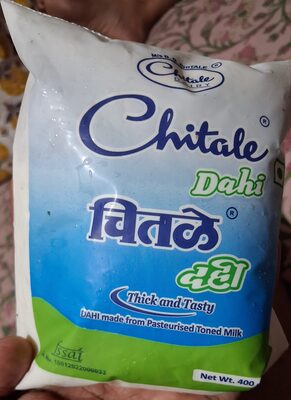
Nutrition per 100 g
| Nutrient | Amul masti dahi | Dahi |
|---|---|---|
| Nutri-Score | b | — |
| NOVA group | — | 1 |
| Calories | 65 kcal | 77 kcal |
| Fat | 3.1 g | 4.1 g |
| Saturated fat | 2 g | 2.8 g |
| Sugars | 4.6 g | 4.8 g |
| Salt | 0.1 g | — |
| Protein | 4 g | 3.4 g |
| Additives | 0 | 0 |
| Allergens | Milk | None listed |
Green = better value for that nutrient (less sugar, fat, salt and calories; more fiber and protein).
Key differences
- Amul masti dahi has 15% fewer calories (65 kcal vs 77 kcal).
- Amul masti dahi has 24% less fat (3.1 g vs 4.1 g).
- Amul masti dahi has 29% less saturated fat (2 g vs 2.8 g).
- Amul masti dahi has 15% more protein (4 g vs 3.4 g).
- Only Amul masti dahi lists: Milk.
Ingredients
Amul masti dahi
dients: Pasteurised toned milk, milk solids, active gen Information: Contains milk. Nutritional Information 10 servings per container Perving size amount per 100 g* Energy (kcal) Total Fat (g) 100 g % RDA 3% 65 3.1 5% 2.0 9% 0.0 0% 9 4.6 4.6 Saturated Fat (g) Trans Fat (g) Cholesterol (mg) Carbohydrate (g) Total Sugars (g) Added Sugars (g) Protein (g) Sodium (mg) Calcium (mg) * RDA stands for Recommended Dietary 0.0 4.0 50 140 0% 3% Allowance per serving Average values Net Weight: 1 kg KEEP REFRIGERATED AT 4�C OR BELOW. AFTER OPENING, STORE IN A CONTAINER WITH LID REFRIGERATE AND CONSUME WITHIN 5 DAYS OR USE BY DATE, WHICHEVER IS EARLIER Milk Marketing Federation Ltd., ul.com
Dahi
Pasteurised toned milk, lactic culture.
FAQ
Which is healthier: Amul masti dahi or Dahi?
Overall, Amul masti dahi has the better nutritional profile on the measures we compare. We compare Nutri-Score, processing level and seven nutrients per 100 g. Your own needs (for example low sugar or high protein) may make a different choice better for you.
Which has fewer calories?
Amul masti dahi has fewer calories: 65 kcal versus 77 kcal per 100 g.
Which has less sugar?
Amul masti dahi has less sugar: 4.6 g versus 4.8 g per 100 g.