
10 beef stock cubes vs Beef Stock cubes x
Overall, 10 beef stock cubes has the better nutritional profile on the measures we compare. It wins on 4 of our comparison points versus 2.

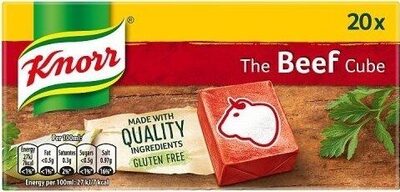
Nutrition per 100 g
| Nutrient | 10 beef stock cubes | Beef Stock cubes x |
|---|---|---|
| Nutri-Score | — | — |
| NOVA group | 4 | 4 |
| Calories | 86 kcal | 70 kcal |
| Fat | 0.5 g | 5 g |
| Saturated fat | 0.3 g | 3 g |
| Sugars | 0.5 g | 1 g |
| Salt | 1 g | 9.8 g |
| Fiber | 2.9 g | — |
| Protein | 0.5 g | 1 g |
| Additives | 2 | 0 |
| Allergens | Celery, Milk | Celery |
Green = better value for that nutrient (less sugar, fat, salt and calories; more fiber and protein).
Key differences
- Beef Stock cubes x has 19% fewer calories (70 kcal vs 86 kcal).
- 10 beef stock cubes has 90% less fat (0.5 g vs 5 g).
- 10 beef stock cubes has 90% less saturated fat (0.3 g vs 3 g).
- 10 beef stock cubes has 50% less sugar (0.5 g vs 1 g).
- 10 beef stock cubes has 90% less salt (1 g vs 9.8 g).
- Beef Stock cubes x has 50% more protein (1 g vs 0.5 g).
- Only 10 beef stock cubes lists: Milk.
Ingredients
10 beef stock cubes
Salt, Palm Oil, Corn Starch, Yeast Extract, Flavourings (Celery, Cows' Milk), Maltodextrin, Beef Extract (3%), Colour: Plain Caramel; Sugar, Onion Powder, Carrot Powder, Parsley, Antioxidant: Rosemary Extracts.
Beef Stock cubes x
salt, vegetable fats (palm, shea butter, sal butter), potato starch, sugar, beef extract (4%), yeast extract, flavourings, onion powder, caramel syrup, maltodextrin, parsley, carrots, spices (parsley roots, celery seeds),
FAQ
Which is healthier: 10 beef stock cubes or Beef Stock cubes x?
Overall, 10 beef stock cubes has the better nutritional profile on the measures we compare. We compare Nutri-Score, processing level and seven nutrients per 100 g. Your own needs (for example low sugar or high protein) may make a different choice better for you.
Which has fewer calories?
Beef Stock cubes x has fewer calories: 70 kcal versus 86 kcal per 100 g.
Which has less sugar?
10 beef stock cubes has less sugar: 0.5 g versus 1 g per 100 g.