
Cellulose gum (Carboxymethylcellulose, E466)
Updated October 19, 2026
Cellulose gum (carboxymethylcellulose, CMC, E466) is a thickener made by chemically modifying plant cellulose so that it dissolves in water. Regulators consider it safe at the levels used in food — FDA lists it as GRAS and both EFSA and JECFA declined to set a numerical daily limit. What keeps it interesting is newer research: a small 2022 human feeding trial found measurable changes in gut bacteria and gut metabolites, and the EU has withdrawn its use in specialised infant and medical foods from 2027.
Quick facts
- Also known as
- Carboxymethylcellulose, CMC, Sodium carboxymethylcellulose, E466
- E-number
- E466
- Function
- Emulsifiers & thickeners
- US status
- GRAS when used in accordance with good manufacturing practice (21 CFR 182.1745); no numerical limit
- EU status
- Permitted as E 466; from April 27, 2027 no longer permitted in dietary foods for infants and young children for special medical purposes (Regulation (EU) 2025/666)
- Acceptable daily intake
- No numerical ADI needed (EFSA, 2018); JECFA group ADI "not specified" for modified celluloses (1989)
- Found in
- 18,663 products (12,481 sold in the US)
- Foodmetria concern level
- Moderate concern How we rate additives
What is Cellulose gum?
Cellulose is the fibre that makes up plant cell walls — the most abundant organic polymer on earth and completely indigestible to humans. Cellulose gum is that same backbone with carboxymethyl groups attached, which is what makes it soluble: plain cellulose will not dissolve in water, and carboxymethylcellulose does.
The US specification is unusually specific about how far that modification goes. Under 21 CFR 182.1745, sodium carboxymethylcellulose must be at least 99.5% pure on a dry-weight basis, carry no more than 0.95 carboxymethyl groups per anhydroglucose unit, and give a solution of at least 25 centipoises viscosity at 2% and 25 °C. In other words, it is a defined, consistent industrial material rather than a crude extract.
Humans have no enzyme that breaks it down, so it passes through largely intact — which is both why it adds almost no calories and why its interaction with the gut microbes that can act on it has become a research question.
On a label it shows up as cellulose gum, carboxymethylcellulose, sodium carboxymethylcellulose, CMC or E466.
Why is Cellulose gum used in food?
Cellulose gum is one of the workhorses of industrial food formulation, because it does several jobs at once at well under 1%:
- Ice cream and frozen desserts. It controls ice-crystal growth and gives body, so the product stays smooth through freezer cycles.
- Drinks. It keeps cocoa, fibre and fruit solids suspended rather than settling, and adds mouthfeel to low-sugar or low-fat drinks.
- Baked goods and gluten-free products. It holds water, which slows staling and improves crumb.
- Low-fat and reduced-sugar products. Much of what fat and syrup contribute is texture; a hydrocolloid can supply part of it.
- Sauces, fillings and processed cheese. It prevents separation and syneresis — the watery layer that otherwise forms.
The US does not cap it by food category: the standard is simply good manufacturing practice, which in effect means the amount that works.
Is Cellulose gum safe? What the research says
What regulators say. FDA lists sodium carboxymethylcellulose as generally recognized as safe when used in accordance with good manufacturing practice. The WHO/FAO expert committee (JECFA) set a group ADI of "not specified" for modified celluloses, including sodium carboxymethylcellulose, at its 35th meeting in 1989 — the category reserved for substances of very low toxicity.
EFSA re-evaluated the whole cellulose family in 2018 and concluded that there was no need for a numerical ADI and that there is no safety concern at the reported uses and use levels. Two details from that opinion are worth having. First, exposure is high in absolute terms compared with most additives: combined cellulose exposure at the 95th percentile reached up to 506 mg per kg of body weight per day, and the Panel considered an indicative total exposure of roughly 660–900 mg/kg for microcrystalline, powdered and modified celluloses. Second, specific toxicity data were not available for every cellulose and every endpoint; the Panel judged read-across between them acceptable because the molecules are structurally and physicochemically similar. That is a reasonable scientific decision, and it is also a reason the file is thinner than the exposure figures might suggest.
The animal research. A 2015 study in Nature gave mice cellulose gum or polysorbate 80 in their drinking water and reported thinning of the protective mucus layer, bacteria moving closer to the gut wall, low-grade inflammation and features of metabolic syndrome; mice already prone to colitis developed worse disease. This is a mouse study, with the emulsifier delivered continuously in water, and how it maps onto human diets was exactly the open question.
The human trial — the reason this page is not simply "low concern". In 2022, a team published the first randomised controlled feeding study of cellulose gum in people (Gastroenterology). Sixteen healthy adults ate the same emulsifier-free diet in a clinical facility for 11 days; seven of them had 15 g of CMC per day added to it, nine did not, and neither participants nor investigators knew who was in which group. The results in the CMC group: a modest increase in abdominal discomfort after meals, reduced diversity of the gut microbiota, lower levels of short-chain fatty acids and free amino acids in stool — and in two participants, bacteria found encroaching into the normally sterile inner mucus layer, the same feature seen in the mouse work.
How to read that honestly: it is a small, short, well-controlled study that measured biological markers, not disease. Sixteen people over 11 days cannot show that cellulose gum causes anything. What it does show is that the effect seen in mice is not confined to mice, and that 15 g a day is enough to move these markers in some people. The dose is also not a typical day's diet — it was chosen to sit at the upper end of estimated intakes, which is standard for a proof-of-principle trial and is part of why the finding needs replication at realistic intakes.
The observational data. In the French NutriNet-Santé cohort (95,442 adults, median 7.4 years of follow-up), higher cellulose gum intake was associated with a small increase in cardiovascular risk: hazard ratio 1.03 (95% CI 1.01–1.05) per standard deviation of intake for cardiovascular disease overall, and 1.04 (1.02–1.06) for coronary heart disease; for the cellulose group as a whole the figures were 1.05 and 1.07. These are observational associations, the effect sizes are small, and intake was estimated from food records without a biological marker — the authors list that among their limitations. In the same cohort's cancer analysis, no cellulose was among the emulsifiers associated with cancer risk.
Bottom line: no regulator considers cellulose gum unsafe, and nothing here suggests harm from an occasional ice cream. It sits above "no concern" for a specific reason: it is the one emulsifier where a controlled human trial has shown measurable changes in the gut microbiome and metabolome, and the EU has just removed it from specialised infant and medical foods. That is a reason to follow the research, not to be alarmed.
Cellulose gum regulation: US vs EU
| Region | Status |
|---|---|
| United States | GRAS when used in accordance with good manufacturing practice (21 CFR 182.1745), with purity and viscosity specifications and no numerical use limit. Not on FDA's post-market review list as of October 2026. |
| European Union | Permitted as E 466. Regulation (EU) 2025/666 removes it from dietary foods for infants and from foods for infants and young children for special medical purposes from April 27, 2027, and tightened contaminant specifications from October 27, 2025. |
| United Kingdom | Permitted as E 466 ("carboxy methyl cellulose"), listed among emulsifiers, stabilisers, thickeners and gelling agents. |
| WHO / FAO (JECFA) | Group ADI "not specified" for modified celluloses, established at the 35th meeting (1989), covering sodium carboxymethyl cellulose. |
In the United States, sodium carboxymethylcellulose is GRAS when used according to good manufacturing practice (21 CFR 182.1745), with purity and viscosity specifications but no numerical use limit. It is not on FDA's list of chemicals under post-market review (list page updated October 2, 2026).
In the European Union, cellulose gum is authorised as E 466, and this is changing at the margins. Commission Regulation (EU) 2025/666, adopted April 4, 2025, removes E 466 from dietary foods for infants and from foods for infants and young children for special medical purposes (categories 13.1.5.1 and 13.1.5.2), and from the list of additives permitted in nutrients used in those products. That withdrawal applies from April 27, 2027, with products already lawfully on the market allowed to run to their durability date. The same regulation tightened the purity specifications for the whole cellulose family, including lower limits for arsenic, lead, mercury and cadmium, from October 27, 2025. All other uses of E 466 remain permitted.
In the United Kingdom it remains on the approved list as "carboxy methyl cellulose" (E 466).
Who should limit or avoid Cellulose gum?
- People with inflammatory bowel disease or a diagnosed sensitive gut. The mechanism studied in both the mouse and human work is the gut mucus layer and the bacteria living on it. Nothing proves that cellulose gum triggers or worsens IBD in people, but if you have it, this is a reasonable ingredient to discuss with your gastroenterologist rather than dismiss.
- People with recurrent bloating or post-meal discomfort. The 2022 trial found a modest increase in abdominal discomfort after meals in the CMC group. If you react to thickened drinks and low-fat dairy, this is one candidate among several.
- Parents of infants on specialised formulas. The EU is withdrawing E 466 from infant and young-child foods for special medical purposes from April 2027 — not because harm was shown, but because the data were judged insufficient for that group.
- Anyone cutting back on ultra-processed food. Cellulose gum rarely appears in food made from whole ingredients; it is a marker of industrial formulation.
Foods that commonly contain Cellulose gum
Share of published products in each category whose ingredient list includes Cellulose gum.
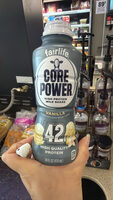
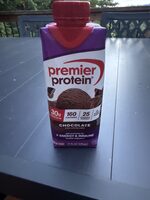
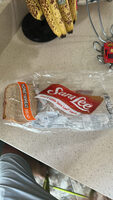
Popular products with Cellulose gum
 NOVA 4
 NOVA 4
 NOVA 4
 NOVA 4
 NOVA 4
 NOVA 4
 NOVA 4
 NOVA 4
 c NOVA 4
 d NOVA 4
Cellulose gum-free alternatives
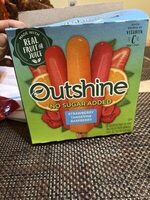
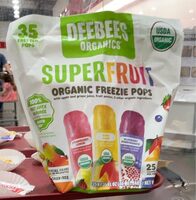
Popular products from the same categories that don't list Cellulose gum and score Nutri-Score A–C.
 a NOVA 4
 c NOVA 4
 c NOVA 4
 c NOVA 4
 a NOVA 4
How to spot Cellulose gum on a label
Look for any of these names in the ingredient list:
Related additives
Frequently asked questions
Is cellulose gum bad for you?
No regulator treats it as unsafe: FDA lists it as GRAS and both EFSA (2018) and JECFA concluded no numerical daily limit is needed. The open question comes from research rather than regulation — a small 2022 human trial found changes in gut bacteria and gut metabolites at 15 g per day.
Is cellulose gum the same as cellulose?
Not quite. Both come from plant cellulose, but cellulose gum has carboxymethyl groups attached so that it dissolves in water; plain cellulose does not. US rules allow up to 0.95 such groups per sugar unit.
Does cellulose gum harm your gut bacteria?
In a 2022 randomised controlled feeding study, seven healthy adults given 15 g a day for 11 days showed reduced gut microbiota diversity, lower stool short-chain fatty acids, and in two cases bacteria encroaching into the inner mucus layer. It is a small, short study of biological markers, not of disease, and it needs replication at everyday intakes.
Is cellulose gum made from wood or cotton?
It is made from plant cellulose, typically wood pulp or cotton linters, then chemically modified and purified to at least 99.5% on a dry-weight basis under US specifications.
Is cellulose gum vegan and gluten-free?
Yes to both. It is plant-derived and contains no gluten, and humans cannot digest it, so it contributes virtually no calories.
How much cellulose gum is safe per day?
Neither EFSA nor JECFA set a number. For context, EFSA estimated combined cellulose intake at the 95th percentile at up to 506 mg per kg of body weight per day, and the 2022 trial used 15 g per day — far above typical food-level amounts.
What foods contain cellulose gum?
Ice cream and frozen desserts, flavoured and fibre-added drinks, baked and gluten-free goods, processed cheese, sauces and fillings, and many low-fat or reduced-sugar products. See the products and categories above for what is in our database.
Sources & references
- 21 CFR 182.1745 — Sodium carboxymethylcellulose (GRAS)
- EFSA (2018). Re-evaluation of celluloses E 460(i), E 460(ii), E 461, E 462, E 463, E 464, E 465, E 466, E 468 and E 469 as food additives. EFSA Journal 16(1):5047
- JECFA — Modified celluloses: group ADI "not specified" (35th meeting, 1989), evaluation summary (IPCS INCHEM)
- Chassaing B. et al. (2022). Randomized controlled-feeding study of dietary emulsifier carboxymethylcellulose reveals detrimental impacts on the gut microbiota and metabolome. Gastroenterology 162(3):743-756
- Chassaing B. et al. (2015). Dietary emulsifiers impact the mouse gut microbiota promoting colitis and metabolic syndrome. Nature 519:92-96
- Sellem L. et al. (2023). Food additive emulsifiers and risk of cardiovascular disease in the NutriNet-Sante cohort: prospective cohort study. BMJ 382:e076058
- Commission Regulation (EU) 2025/666 of 4 April 2025 amending Annexes II and III to Regulation (EC) No 1333/2008 as regards sodium carboxy methyl cellulose (E 466) and the specifications for certain celluloses
- UK Government — Approved additives and E numbers
Product data: Open Food Facts (ODbL), updated daily. Additive information is for general education and is not medical advice. Always check the package label. Our methodology.