
Almondmilk & cashewmilk
Almondmilk & cashewmilk provides 27 kcal per 100 ml, with 4.1 g of sugars and 0.3 g of protein. That is 12% more sugar than the average product in this category. Its Nutri-Score is C and it is classified as NOVA 4 (ultra-processed food). It is listed in the Plant-based milk alternatives category. Contains: nuts.
Nutrient levels per 100 ml
Levels use UK front-of-pack reference thresholds for drinks.
Nutrition facts
Serving size: 1 bottle (296 ml)
| Nutrient | Per 100 ml | Per serving | % DV* | Category avg |
|---|---|---|---|---|
| Calories | 27 kcal | 80 kcal | 54 −50% | |
| Total fat | 0.8 g | 2.5 g | 3% | 2.9 −71% |
| Saturated fat | 0 g | 0 g | 0% | 1.2 −100% |
| Carbohydrates | 4.4 g | 13 g | 5% | 5.6 −21% |
| Total sugars | 4.1 g | 12 g | 3.6 +12% | |
| Dietary fiber | 0.3 g | 0.9 g | 3% | 0.6 −50% |
| Protein | 0.3 g | 1 g | 2% | 1.4 −76% |
| Salt | 0.2 g | 0.6 g | 0.2 +22% |
*% Daily Value for a serving, based on a 2,000-calorie diet (FDA reference values). Category average across 1233 Plant-based milk alternatives products on Foodmetria.
Serving size from the US product label in USDA FoodData Central, label data from October 2021. Other values: Open Food Facts.
Nutrition claims check
Claims its numbers support
- Low fat
- 0.8 g fat per 100 ml (EU: no more than 1.5 g per 100 ml)
- Low saturated fat
- 0 g per 100 ml, 0% of calories (EU: no more than 0.8 g per 100 ml and 10% of calories)
- Low sodium
- 80 mg sodium per 100 ml (EU: no more than 120 mg per 100 ml)
Checked against the per-100 ml thresholds of EU Regulation 1924/2006, using the nutrition data above. US labels follow FDA rules, which are mostly based on serving size and can give a different result; FDA has no defined “low sugar” claim.
Compared with other plant-based milk alternatives
Bar shows the share of products in this category that contain less of the nutrient.
Ingredients
Almondmilk (filtered water, almonds), cashewmilk (filtered water, cashews), cane sugar, contains 2% or less of: vitamin and mineral blend (calcium carbonate, zinc gluconate, vitamin a palmitate, riboflavin [b2], vitamin d2, vitamin b12), sea salt, natural flavor, sunflower lecithin, locust bean gum, gellan gum, ascorbic acid.
- Allergens
- Nuts
Additives 4
Overexposure risk is based on EFSA evaluations as recorded by Open Food Facts.
Product details
- Serving size
- 1 bottle (296 ml)
- Sold in
- United States
- Barcode
- 0025293004306
Prices reported by shoppers
Loading prices…
Frequently asked questions
How many calories are in Almondmilk & cashewmilk?
Almondmilk & cashewmilk contains 27 kcal per 100 ml and about 80 kcal per serving (1 bottle (296 ml)).
How much sugar is in Almondmilk & cashewmilk?
Almondmilk & cashewmilk has 4.1 g of sugars per 100 ml, which is considered moderate by UK front-of-pack guidelines.
Is Almondmilk & cashewmilk healthy?
It has a Nutri-Score of C (A is best, E is worst); it is in NOVA group 4 — ultra-processed food. Scores describe nutritional quality and processing, not suitability for your individual diet.
What allergens does Almondmilk & cashewmilk contain?
According to the label data it contains: Nuts. Recipes change — always check the package label.
Source: Open Food Facts (ODbL). Last updated April 23, 2020. Spotted a mistake? Edit this product on Open Food Facts. Not medical advice — always check the package label.
Reviews
Compare & rankings
Healthier alternatives
Best in category →Same category, meaningfully better on at least one measure and no worse on the others. Each card shows what improves.
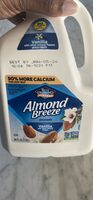 b NOVA 4
 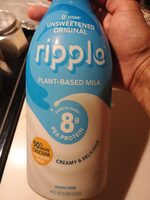 b NOVA 4
 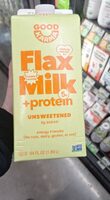 b NOVA 4
 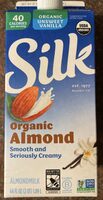 b NOVA 4
 More plant-based milk alternatives
View all → e NOVA 4
  e
e  b NOVA 4
  c NOVA 3
  b NOVA 1
  c NOVA 4