
Thick Sliced Pepperoni vs Salami Pepperoni
Overall, Salami Pepperoni has the better nutritional profile on the measures we compare. It wins on 2 of our comparison points versus 1.
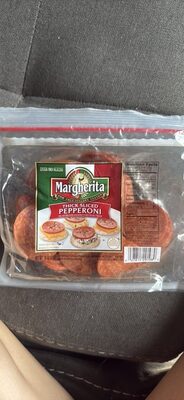
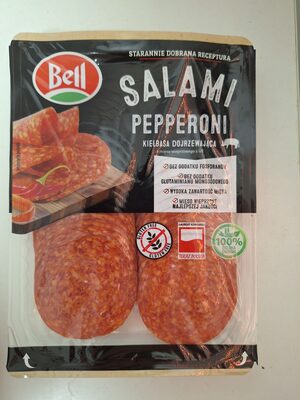
Nutrition per 100 g
| Nutrient | Thick Sliced Pepperoni | Salami Pepperoni |
|---|---|---|
| Nutri-Score | e | e |
| NOVA group | 4 | 4 |
| Calories | 464 kcal | 479 kcal |
| Fat | 46.4 g | 44 g |
| Saturated fat | 17.9 g | 19 g |
| Sugars | 3.6 g | 1.1 g |
| Salt | 4.6 g | 3.4 g |
| Fiber | 0 g | — |
| Protein | 21.4 g | 18 g |
| Additives | 4 | 6 |
| Allergens | Beef, Pork | None listed |
Green = better value for that nutrient (less sugar, fat, salt and calories; more fiber and protein).
Key differences
- Salami Pepperoni has 69% less sugar (1.1 g vs 3.6 g).
- Salami Pepperoni has 24% less salt (3.4 g vs 4.6 g).
- Thick Sliced Pepperoni has 16% more protein (21.4 g vs 18 g).
- Only Thick Sliced Pepperoni lists: Beef, Pork.
Ingredients
Thick Sliced Pepperoni
pork, beef, salt, contains 2% or less of: dextrose, natural flavors extractives of paprika, lactic acid starter culture, dehydrated granulated garli sodium nitrite, bha, bht, citric acid
Salami Pepperoni
Mięso wieprzowe (UE), tłuszcz wieprzowy, sól, przyprawy (w tym papryka 0,5%), maltodekstryna, glukoza, dekstroza, cukier, syrop glukozowy, barwnik: kwas karminowy; suszony burak czerwony, stabilizator: kwas cytrynowy; przeciwutleniacze: kwas askorbinowy, askorbinian sodu, ekstrakty z rozmarynu; aromat papryki, ekstrakty przypraw, substancja konserwująca: azotyn sodu; kultury starterowe
FAQ
Which is healthier: Thick Sliced Pepperoni or Salami Pepperoni?
Overall, Salami Pepperoni has the better nutritional profile on the measures we compare. We compare Nutri-Score, processing level and seven nutrients per 100 g. Your own needs (for example low sugar or high protein) may make a different choice better for you.
Which has fewer calories?
Thick Sliced Pepperoni has fewer calories: 464 kcal versus 479 kcal per 100 g.
Which has less sugar?
Salami Pepperoni has less sugar: 1.1 g versus 3.6 g per 100 g.