
Plant based ORIGINAL ALMONDMILK vs Lait d'amande
Neither product is clearly better overall — it depends on what matters most to you.
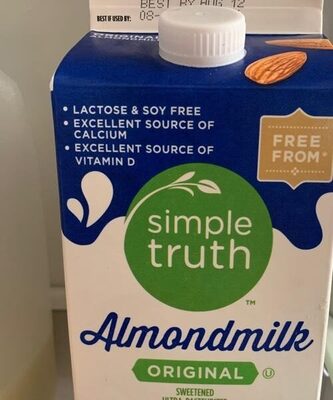
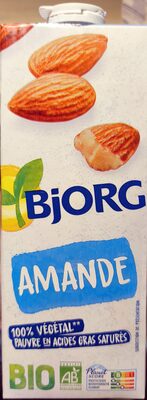
Nutrition per 100 ml
| Nutrient | Plant based ORIGINAL ALMONDM... | Lait d'amande |
|---|---|---|
| Nutri-Score | c | c |
| NOVA group | 4 | 3 |
| Calories | 25 kcal | 29 kcal |
| Fat | 1 g | 1.2 g |
| Saturated fat | 0 g | 0.2 g |
| Sugars | 2.9 g | 3.3 g |
| Salt | 0.1 g | 0.1 g |
| Fiber | 0 g | — |
| Protein | 0.4 g | 0.5 g |
| Additives | 2 | 0 |
| Allergens | Nuts | Nuts |
Green = better value for that nutrient (less sugar, fat, salt and calories; more fiber and protein).
Key differences
- Plant based ORIGINAL ALMONDMILK has 12% less sugar (2.9 g vs 3.3 g).
- Lait d'amande is less processed (lower NOVA group).
Ingredients
Plant based ORIGINAL ALMONDMILK
ALMONDMILK (FILTERED WATER, ALMONDS), SUGAR, MINERAL AND VITAMIN BLEND (TRICALCIUM PHOSPHATE, POTASSIUM CITRATE, ALPHA TOCOPHEROL ACETATE [VITAMIN EJ, VITAMIN A PALMITATE, VITAMIN D2, VITAMIN B12), SEA SALT, GUAR GUM, GELLAN GUM, NATURAL FLAVOR. CONTAINS: ALMONDS.
Lait d'amande
Lait d'amande* (eau, amandes* 2,8%), sucre de canne non raffiné, amidon de riz*, sel marin. *ingrédients biologiques
FAQ
Which is healthier: Plant based ORIGINAL ALMONDMILK or Lait d'amande?
Neither product is clearly better overall — it depends on what matters most to you. We compare Nutri-Score, processing level and seven nutrients per 100 g. Your own needs (for example low sugar or high protein) may make a different choice better for you.
Which has fewer calories?
Plant based ORIGINAL ALMONDMILK has fewer calories: 25 kcal versus 29 kcal per 100 g.
Which has less sugar?
Plant based ORIGINAL ALMONDMILK has less sugar: 2.9 g versus 3.3 g per 100 g.