
Pesto vs Pesto Ricotta e Noci
Overall, Pesto has the better nutritional profile on the measures we compare. It wins on 4 of our comparison points versus 2.
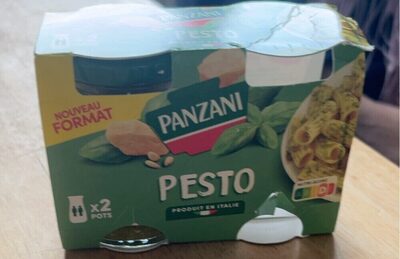
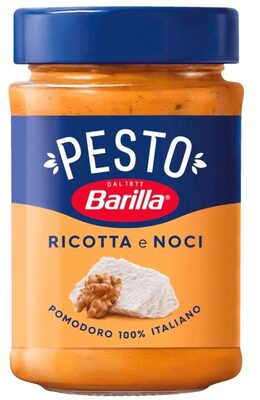
Nutrition per 100 g
| Nutrient | Pesto | Pesto Ricotta e Noci |
|---|---|---|
| Nutri-Score | e | e |
| NOVA group | 4 | 4 |
| Calories | 331 kcal | 389 kcal |
| Fat | 31 g | 36 g |
| Saturated fat | 4.5 g | 4.7 g |
| Sugars | 3.5 g | 7.3 g |
| Salt | 2.8 g | 2.4 g |
| Fiber | 1.8 g | 1.5 g |
| Protein | 3.8 g | 5.6 g |
| Additives | 2 | 1 |
| Allergens | Eggs, Milk, Nuts | Eggs, Milk, Nuts |
Green = better value for that nutrient (less sugar, fat, salt and calories; more fiber and protein).
Key differences
- Pesto has 15% fewer calories (331 kcal vs 389 kcal).
- Pesto has 14% less fat (31 g vs 36 g).
- Pesto has 52% less sugar (3.5 g vs 7.3 g).
- Pesto Ricotta e Noci has 14% less salt (2.4 g vs 2.8 g).
- Pesto has 17% more fiber (1.8 g vs 1.5 g).
- Pesto Ricotta e Noci has 32% more protein (5.6 g vs 3.8 g).
Ingredients
Pesto
Basilic (41%), huile de tournesol (28%), eau, GRANA PADANO (LAIT, Œuf) (5%), flocons de pommes de terre, sucre, sel, farine de NOIX DE CAJOU (FRUITS A COQUES), arôme naturel (LAIT), pignons de pin (0,5%), acidifiant : acide lactique, antioxydant: acide ascorbique, ail, arôme naturel de basilic. Peut contenir: arachides.
Pesto Ricotta e Noci
Sonnenblumenöl, 21,5 % Tomatenfruchtfleisch, 20 % Ricotta-Käse [Molke (Milch), Milch], 5,7 % Tomatenmarkkonzentrat, 5 % Walnusskerne, Basilikum, Zucker, Grana Padano g. U. Käse (MILCH, Lysozym aus EI), Salz, Cashewkerne, Molkepulver (Milch), Reisstärke, Säureregulator: Milchsäure, Knoblauch, natürliche Aromen (Milch), Buttermilchpulver (Milch).
FAQ
Which is healthier: Pesto or Pesto Ricotta e Noci?
Overall, Pesto has the better nutritional profile on the measures we compare. We compare Nutri-Score, processing level and seven nutrients per 100 g. Your own needs (for example low sugar or high protein) may make a different choice better for you.
Which has fewer calories?
Pesto has fewer calories: 331 kcal versus 389 kcal per 100 g.
Which has less sugar?
Pesto has less sugar: 3.5 g versus 7.3 g per 100 g.