
Miso Soup vs Bio-Gemüsebrühe
Overall, Bio-Gemüsebrühe has the better nutritional profile on the measures we compare. It wins on 3 of our comparison points versus 2.
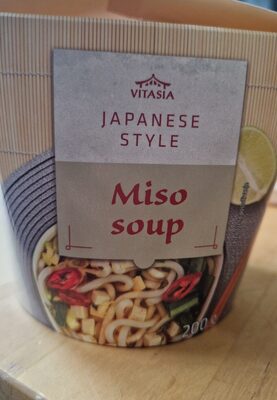
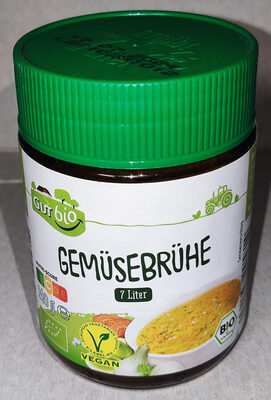
Nutrition per 100 g
| Nutrient | Miso Soup | Bio-Gemüsebrühe |
|---|---|---|
| Nutri-Score | — | — |
| NOVA group | 4 | 4 |
| Calories | 129 kcal | 3 kcal |
| Fat | 0.7 g | 0.1 g |
| Saturated fat | — | 0.1 g |
| Sugars | 1.5 g | 0.5 g |
| Salt | 0 g | 1.1 g |
| Fiber | — | 1.2 g |
| Protein | 5.6 g | 0.1 g |
| Additives | 7 | 0 |
| Allergens | Gluten, Peanuts, Sesame seeds, Soybeans | Celery |
Green = better value for that nutrient (less sugar, fat, salt and calories; more fiber and protein).
Key differences
- Bio-Gemüsebrühe has 98% fewer calories (3 kcal vs 129 kcal).
- Bio-Gemüsebrühe has 86% less fat (0.1 g vs 0.7 g).
- Bio-Gemüsebrühe has 67% less sugar (0.5 g vs 1.5 g).
- Miso Soup has no salt, while Bio-Gemüsebrühe has 1.1 g.
- Miso Soup has 98% more protein (5.6 g vs 0.1 g).
- Only Miso Soup lists: Gluten, Peanuts, Sesame seeds, Soybeans.
- Only Bio-Gemüsebrühe lists: Celery.
Ingredients
Miso Soup
Udon WHEAT noodles 85 % (water, WHEAT flour, salt, modified tapioca starch, WHEAT GLUTEN, acidity regulator: E 270, thickener: E 401), miso sauce 13 % (water, SOYBEAN miso paste (SOYBEANS, water, salt), sugar, SOY SAUCE (water, SOYBEANS, WHEAT, salt), salt, onion powder, Wakame seaweed, garlic powder, yeast extract, colour: E 150a, thickener: E 415, acidity regulator: E 330, flavour enhancer: E 635, flavouring), freeze-dried tofu pieces 1% (SOYBEANS, water, firming agent: E 575), dried spring onion pieces, dried spinach pieces. May contain: crustaceans, eggs, fis, peanuts, sesame seeds.
Bio-Gemüsebrühe
Meersalz, Glukosesirup, Maisstärke, Zwiebeln, Karotten, Rohrzucker, Lauch, Kurkuma, Pfeffer, Petersilie, Sellerieblätter, Liebstöckelblätter, Sonnenblumenöl
FAQ
Which is healthier: Miso Soup or Bio-Gemüsebrühe?
Overall, Bio-Gemüsebrühe has the better nutritional profile on the measures we compare. We compare Nutri-Score, processing level and seven nutrients per 100 g. Your own needs (for example low sugar or high protein) may make a different choice better for you.
Which has fewer calories?
Bio-Gemüsebrühe has fewer calories: 3 kcal versus 129 kcal per 100 g.
Which has less sugar?
Bio-Gemüsebrühe has less sugar: 0.5 g versus 1.5 g per 100 g.