
Hamburger di Pollo vs Burguer meat pollo
Overall, Burguer meat pollo has the better nutritional profile on the measures we compare. It wins on 4 of our comparison points versus 3.

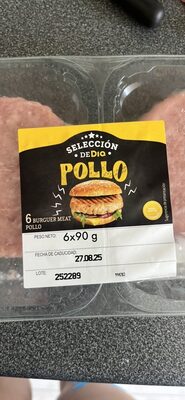
Nutrition per 100 g
| Nutrient | Hamburger di Pollo | Burguer meat pollo |
|---|---|---|
| Nutri-Score | c | a |
| NOVA group | 4 | 4 |
| Calories | 132 kcal | 160 kcal |
| Fat | 7.1 g | 9.2 g |
| Saturated fat | 2.1 g | 1.2 g |
| Sugars | 0 g | 0.6 g |
| Salt | 1.4 g | 0 g |
| Fiber | 0 g | 0 g |
| Protein | 17 g | 17.9 g |
| Additives | 1 | 4 |
| Allergens | None listed | Sulphur dioxide and sulphites |
Green = better value for that nutrient (less sugar, fat, salt and calories; more fiber and protein).
Key differences
- Hamburger di Pollo has 18% fewer calories (132 kcal vs 160 kcal).
- Hamburger di Pollo has 23% less fat (7.1 g vs 9.2 g).
- Burguer meat pollo has 42% less saturated fat (1.2 g vs 2.1 g).
- Hamburger di Pollo has no sugar, while Burguer meat pollo has 0.6 g.
- Burguer meat pollo has no salt, while Hamburger di Pollo has 1.4 g.
- Burguer meat pollo has the better Nutri-Score.
- Only Burguer meat pollo lists: Sulphur dioxide and sulphites.
Ingredients
Hamburger di Pollo
92% carne di pollo, acqua, patate, fibra di patate, sale, aromi, rosmarino, concentrato di barbabietola, antiossidante: acido ascorbico. Può contenere tracce di: Latte, uova.
Burguer meat pollo
Carne de pollo (86%), agua, har fibra vegetal, sal, almidón, dextrosa, aromas, (aro aroma de humo), antioxidantes (E-301, E-331), const (E-221: sulfito), especias y colorante (E-120).
FAQ
Which is healthier: Hamburger di Pollo or Burguer meat pollo?
Overall, Burguer meat pollo has the better nutritional profile on the measures we compare. We compare Nutri-Score, processing level and seven nutrients per 100 g. Your own needs (for example low sugar or high protein) may make a different choice better for you.
Which has fewer calories?
Hamburger di Pollo has fewer calories: 132 kcal versus 160 kcal per 100 g.
Which has less sugar?
Hamburger di Pollo has less sugar: 0 g versus 0.6 g per 100 g.