
Feta vs Feta
Neither product is clearly better overall — it depends on what matters most to you.
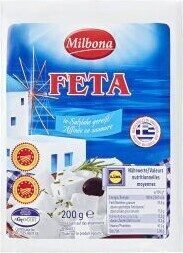
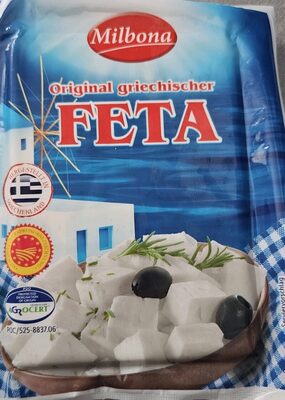
Nutrition per 100 g
| Nutrient | Feta | Feta |
|---|---|---|
| Nutri-Score | d | d |
| NOVA group | 3 | — |
| Calories | 290 kcal | 287 kcal |
| Fat | 24.6 g | 24.6 g |
| Saturated fat | 17.9 g | 17.9 g |
| Sugars | 0.2 g | 0.2 g |
| Salt | 2 g | 2 g |
| Fiber | 0 g | — |
| Protein | 16.2 g | 16.2 g |
| Additives | 0 | 0 |
| Allergens | Milk | Milk |
Green = better value for that nutrient (less sugar, fat, salt and calories; more fiber and protein).
Ingredients
Feta
lait de brebis pasteurisé (70% minimum), lait de chèvre pasteurisé (30% maximum), sel, enzyme coagulante d'origine microbienne, ferments lactiques.
Feta
sheep's milk, kgie milk, salt, lactic acid fermentation bacteria, produced with microbial re temperate night, best before: see back of package, store at 2°c to 8°c, after opening store and consumed within 3 days, lid! sp, with 0,0, sp, k,, ul, poznaska 48, jankowice, 62-080 tarmowo podgórne, gamintojas/producent la farm sa, gr-42100 trikalg, graikija, greece grymasis kiekis:/net weight: 200 g e gr 46,2,4 ce 05 4 056489 127253 laikyti ne aukštesnėje nei 8 °c temperatūroje,/tinka vartotí iki:/ partijos nt:/
FAQ
Which is healthier: Feta or Feta?
Neither product is clearly better overall — it depends on what matters most to you. We compare Nutri-Score, processing level and seven nutrients per 100 g. Your own needs (for example low sugar or high protein) may make a different choice better for you.
Which has fewer calories?
Feta has fewer calories: 287 kcal versus 290 kcal per 100 g.
Which has less sugar?
Feta has less sugar: 0.2 g versus 0.2 g per 100 g.