
Eliez Kalamon vs Griechische Bio-Oliven, grün
Overall, Griechische Bio-Oliven, grün has the better nutritional profile on the measures we compare. It wins on 5 of our comparison points versus 2.

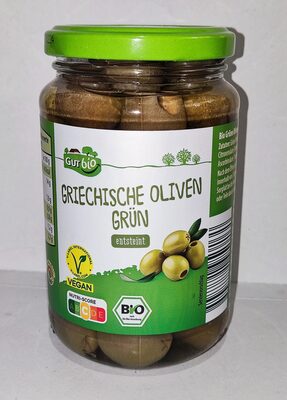
Nutrition per 100 g
| Nutrient | Eliez Kalamon | Griechische Bio-Oliven, grün |
|---|---|---|
| Nutri-Score | e | d |
| NOVA group | — | 3 |
| Calories | 232 kcal | 140 kcal |
| Fat | 22.6 g | 14 g |
| Saturated fat | 1.9 g | 1.9 g |
| Sugars | 0.4 g | 0.8 g |
| Salt | 3.4 g | 2.7 g |
| Protein | 1.6 g | 1.2 g |
| Additives | 0 | 2 |
| Allergens | None listed | None listed |
Green = better value for that nutrient (less sugar, fat, salt and calories; more fiber and protein).
Key differences
- Griechische Bio-Oliven, grün has 40% fewer calories (140 kcal vs 232 kcal).
- Griechische Bio-Oliven, grün has 38% less fat (14 g vs 22.6 g).
- Eliez Kalamon has 50% less sugar (0.4 g vs 0.8 g).
- Griechische Bio-Oliven, grün has 21% less salt (2.7 g vs 3.4 g).
- Eliez Kalamon has 25% more protein (1.6 g vs 1.2 g).
- Griechische Bio-Oliven, grün has the better Nutri-Score.
Ingredients
Eliez Kalamon
во: но тегло. BG Маслини Каламон. Пастьоризиран продукт. Съставки: маслини Каламон, вода, оцет, трапезна сол, маслиново масло Extra virgin. Неотворен на сухо и тъмно място най-добър до: / Партида: виж ръба на капачката. След отваряне съхранявайте в хладилник и консумирайте до 14 дни, но не по-късно от датата, обозначаваща срока на трайност. 700ml G GRE PRO +
Griechische Bio-Oliven, grün
Grüne Oliven, Wasser, Salz, Säuerungsmittel: Citronensäure, Rotweinessig, Antioxidationsmittel: Ascorbinsäure.
FAQ
Which is healthier: Eliez Kalamon or Griechische Bio-Oliven, grün?
Overall, Griechische Bio-Oliven, grün has the better nutritional profile on the measures we compare. We compare Nutri-Score, processing level and seven nutrients per 100 g. Your own needs (for example low sugar or high protein) may make a different choice better for you.
Which has fewer calories?
Griechische Bio-Oliven, grün has fewer calories: 140 kcal versus 232 kcal per 100 g.
Which has less sugar?
Eliez Kalamon has less sugar: 0.4 g versus 0.8 g per 100 g.