
Chocolate Protein Almondmilk vs Unsweet Cashew Milk
Overall, Unsweet Cashew Milk has the better nutritional profile on the measures we compare. It wins on 4 of our comparison points versus 3.
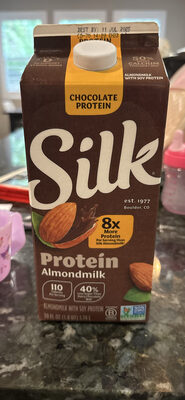
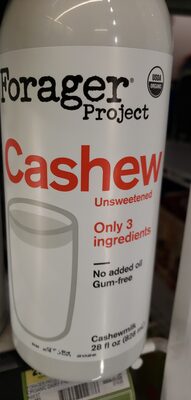
Nutrition per 100 ml
| Nutrient | Chocolate Protein Almondmilk | Unsweet Cashew Milk |
|---|---|---|
| Nutri-Score | b | a |
| NOVA group | 4 | 3 |
| Calories | 46 kcal | 46 kcal |
| Fat | 0.8 g | 3.3 g |
| Saturated fat | 0 g | 0.6 g |
| Sugars | 5.8 g | 0.4 g |
| Salt | 0.3 g | 0 g |
| Fiber | 0.4 g | 0.4 g |
| Protein | 3.3 g | 1.3 g |
| Additives | 5 | 0 |
| Allergens | Nuts, Soybeans | Nuts |
Green = better value for that nutrient (less sugar, fat, salt and calories; more fiber and protein).
Key differences
- Chocolate Protein Almondmilk has 75% less fat (0.8 g vs 3.3 g).
- Chocolate Protein Almondmilk has no saturated fat, while Unsweet Cashew Milk has 0.6 g.
- Unsweet Cashew Milk has 93% less sugar (0.4 g vs 5.8 g).
- Chocolate Protein Almondmilk has 62% more protein (3.3 g vs 1.3 g).
- Unsweet Cashew Milk has the better Nutri-Score.
- Unsweet Cashew Milk is less processed (lower NOVA group).
- Only Chocolate Protein Almondmilk lists: Soybeans.
Ingredients
Chocolate Protein Almondmilk
Almondmilk (Water, Almonds), Cane Sugar, Soy Protein Isolate, Contains 1% or less of:, Cocoa Powder (Processed With Alkali), Vitamin and Mineral Blend (Calcium Carbonate, Vitamin A Palmitate, Vitamin 02, Riboflavin [B2], Vitamin B12), Calcium Phosphate, Sea Salt, Soy Lecithin, Sodium Ascorbate (Vitamin C To Preserve Freshness), Gellan Gum, Natural Flavor
Unsweet Cashew Milk
Filtered water, cashews, gluten-free oats, sea salt.
FAQ
Which is healthier: Chocolate Protein Almondmilk or Unsweet Cashew Milk?
Overall, Unsweet Cashew Milk has the better nutritional profile on the measures we compare. We compare Nutri-Score, processing level and seven nutrients per 100 g. Your own needs (for example low sugar or high protein) may make a different choice better for you.
Which has fewer calories?
Chocolate Protein Almondmilk has fewer calories: 46 kcal versus 46 kcal per 100 g.
Which has less sugar?
Unsweet Cashew Milk has less sugar: 0.4 g versus 5.8 g per 100 g.