
British Beef Mince Higher Welfare 12% Fat vs Beef & Veg Mince
Neither product is clearly better overall — it depends on what matters most to you.
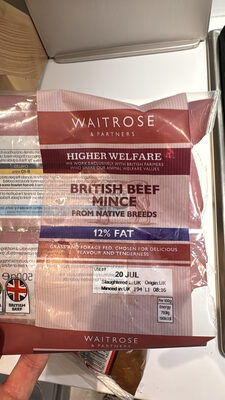
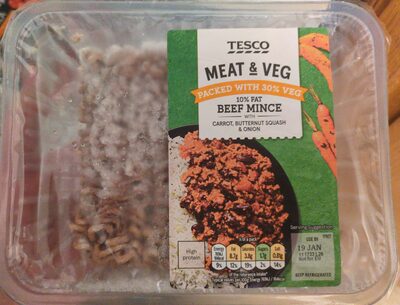
Nutrition per 100 g
| Nutrient | British Beef Mince Higher We... | Beef & Veg Mince |
|---|---|---|
| Nutri-Score | c | c |
| NOVA group | 1 | 4 |
| Calories | 190 kcal | 184 kcal |
| Fat | 11.9 g | 8.7 g |
| Saturated fat | 4.6 g | 3.8 g |
| Sugars | 0 g | 1.7 g |
| Salt | 0.2 g | 0.8 g |
| Fiber | 0 g | 1.1 g |
| Protein | 20.3 g | 20.8 g |
| Additives | 0 | 1 |
| Allergens | None listed | Beef |
Green = better value for that nutrient (less sugar, fat, salt and calories; more fiber and protein).
Key differences
- Beef & Veg Mince has 27% less fat (8.7 g vs 11.9 g).
- Beef & Veg Mince has 17% less saturated fat (3.8 g vs 4.6 g).
- British Beef Mince Higher Welfare 12% Fat has no sugar, while Beef & Veg Mince has 1.7 g.
- British Beef Mince Higher Welfare 12% Fat has 80% less salt (0.2 g vs 0.8 g).
- Beef & Veg Mince has 100% more fiber (1.1 g vs 0 g).
- British Beef Mince Higher Welfare 12% Fat is less processed (lower NOVA group).
- Only Beef & Veg Mince lists: Beef.
Ingredients
British Beef Mince Higher Welfare 12% Fat
British beef (100%)
Beef & Veg Mince
Beef (63%), Vegetables (31%), Rice Flour, Salt, Onion Powder, Sugar, Dextrose, Yeast Extract, Black Pepper, Rapeseed Oil, Paprika, Bamboo Fibre, Preservative (Sodium Metabisulphite), White Pepper, Bay Leaf, Black Pepper Extract, Flavouring. Vegetables in varying proportions: Carrot, Butternut Squash, Onion.
FAQ
Which is healthier: British Beef Mince Higher Welfare 12% Fat or Beef & Veg Mince?
Neither product is clearly better overall — it depends on what matters most to you. We compare Nutri-Score, processing level and seven nutrients per 100 g. Your own needs (for example low sugar or high protein) may make a different choice better for you.
Which has fewer calories?
Beef & Veg Mince has fewer calories: 184 kcal versus 190 kcal per 100 g.
Which has less sugar?
British Beef Mince Higher Welfare 12% Fat has less sugar: 0 g versus 1.7 g per 100 g.