
Unsweetened Vanilla Almond vs Oatly! Whole Oat Drink
Neither product is clearly better overall — it depends on what matters most to you.
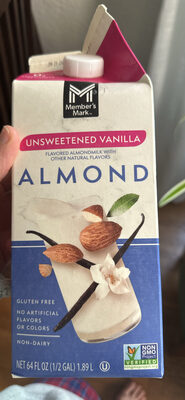
Nutrition per 100 ml
| Nutrient | Unsweetened Vanilla Almond | Oatly! Whole Oat Drink |
|---|---|---|
| Nutri-Score | — | a |
| NOVA group | 4 | 3 |
| Calories | 13 kcal | 60 kcal |
| Fat | 1 g | 2.8 g |
| Saturated fat | — | 0.3 g |
| Sugars | 0 g | 3.4 g |
| Salt | 0.2 g | 0.1 g |
| Fiber | 0.4 g | 0.8 g |
| Protein | 0.4 g | 1.1 g |
| Additives | 4 | 2 |
| Allergens | Nuts | Gluten |
Green = better value for that nutrient (less sugar, fat, salt and calories; more fiber and protein).
Key differences
- Unsweetened Vanilla Almond has 79% fewer calories (13 kcal vs 60 kcal).
- Unsweetened Vanilla Almond has 63% less fat (1 g vs 2.8 g).
- Unsweetened Vanilla Almond has no sugar, while Oatly! Whole Oat Drink has 3.4 g.
- Oatly! Whole Oat Drink has 48% more fiber (0.8 g vs 0.4 g).
- Oatly! Whole Oat Drink has 62% more protein (1.1 g vs 0.4 g).
- Oatly! Whole Oat Drink is less processed (lower NOVA group).
- Only Unsweetened Vanilla Almond lists: Nuts.
- Only Oatly! Whole Oat Drink lists: Gluten.
Ingredients
Unsweetened Vanilla Almond
ALMONDMILK (FILTERED WATER, ALMONDS), TRICALCIUM PHOSPHATE, SEA SALT, NATURAL FLAVORS, GELLAN GUM, SUNFLOWER LECITHIN, LOCUST BEAN GUM, VITAMIN A PALMITATE, ERGOCALCIFEROL (VITAMIN D2), DL-ALPHA TOCOPHEROL ACETATE (VITAMIN E), CONTAINS ALMONDS.
Oatly! Whole Oat Drink
Water, OATS 10%, rapeseed oil, acidity regulator (dipotassium phosphate), minerals (calcium carbonate, potassium iodide), salt, vitamins (D, riboflavin, B12)
FAQ
Which is healthier: Unsweetened Vanilla Almond or Oatly! Whole Oat Drink?
Neither product is clearly better overall — it depends on what matters most to you. We compare Nutri-Score, processing level and seven nutrients per 100 g. Your own needs (for example low sugar or high protein) may make a different choice better for you.
Which has fewer calories?
Unsweetened Vanilla Almond has fewer calories: 13 kcal versus 60 kcal per 100 g.
Which has less sugar?
Unsweetened Vanilla Almond has less sugar: 0 g versus 3.4 g per 100 g.