
THINaddictives vs Fig Rolls
Overall, THINaddictives has the better nutritional profile on the measures we compare. It wins on 3 of our comparison points versus 1.
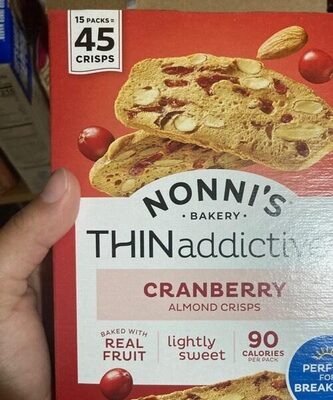

Nutrition per 100 g
| Nutrient | THINaddictives | Fig Rolls |
|---|---|---|
| Nutri-Score | — | d |
| NOVA group | 4 | 4 |
| Calories | 429 kcal | 392 kcal |
| Fat | 14.3 g | 11.1 g |
| Saturated fat | 0.9 g | 5 g |
| Sugars | 33.3 g | 36.7 g |
| Salt | 0.6 g | 0.3 g |
| Fiber | 4.8 g | 3.8 g |
| Protein | 14.3 g | 4.4 g |
| Additives | 0 | 4 |
| Allergens | Eggs, Gluten, Nuts | Gluten, Milk |
Green = better value for that nutrient (less sugar, fat, salt and calories; more fiber and protein).
Key differences
- Fig Rolls has 22% less fat (11.1 g vs 14.3 g).
- THINaddictives has 82% less saturated fat (0.9 g vs 5 g).
- THINaddictives has 20% more fiber (4.8 g vs 3.8 g).
- THINaddictives has 69% more protein (14.3 g vs 4.4 g).
- Only THINaddictives lists: Eggs, Nuts.
- Only Fig Rolls lists: Milk.
Ingredients
THINaddictives
ENRICHED UNBLEACHED FLOUR (WHEAT FLOUR, NIACIN, REDUCED IRON, THIAMIN MONONITRATE, RIBOFLAVIN, FOLIC ACID), EGGS, SUGAR, ALMONDS, CRANBERRIES (CRANBERRY, SUGAR, SUNFLOWER OIL), RAISINS (RAISINS, COTTONSEED OIL), NATURAL FLAVOR, CINNAMON, SALT. CONTAINS: WHEAT, EGG, ALMOND. MAY CONTAIN: OTHER TREE NUTS, SOY AND MILK.
Fig Rolls
fig paste (32%), wheat flour (wheat flour, calcum carbonate, iron, niacin, thiamin), sugar, palm oil, glucose syrup, partially inverted sugar syrup, whey powder (milk) salt, raising agents: sodium carbonates, ammonium carbonates, acidity regulator, citric acid,
FAQ
Which is healthier: THINaddictives or Fig Rolls?
Overall, THINaddictives has the better nutritional profile on the measures we compare. We compare Nutri-Score, processing level and seven nutrients per 100 g. Your own needs (for example low sugar or high protein) may make a different choice better for you.
Which has fewer calories?
Fig Rolls has fewer calories: 392 kcal versus 429 kcal per 100 g.
Which has less sugar?
THINaddictives has less sugar: 33.3 g versus 36.7 g per 100 g.