
Redes BBQ vs Bhujia
Overall, Redes BBQ has the better nutritional profile on the measures we compare. It wins on 5 of our comparison points versus 4.
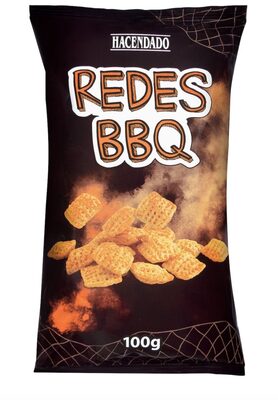
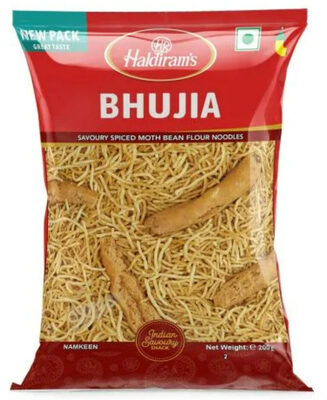
Nutrition per 100 g
| Nutrient | Redes BBQ | Bhujia |
|---|---|---|
| Nutri-Score | d | e |
| NOVA group | 4 | 3 |
| Calories | 515 kcal | 564 kcal |
| Fat | 29 g | 40 g |
| Saturated fat | 2.8 g | 10 g |
| Sugars | 8.4 g | 0 g |
| Salt | 1.8 g | 1.4 g |
| Fiber | 6.3 g | 0 g |
| Protein | 4.4 g | 20 g |
| Additives | 5 | 0 |
| Allergens | None listed | Nuts |
Green = better value for that nutrient (less sugar, fat, salt and calories; more fiber and protein).
Key differences
- Redes BBQ has 28% less fat (29 g vs 40 g).
- Redes BBQ has 72% less saturated fat (2.8 g vs 10 g).
- Bhujia has no sugar, while Redes BBQ has 8.4 g.
- Bhujia has 24% less salt (1.4 g vs 1.8 g).
- Redes BBQ has 100% more fiber (6.3 g vs 0 g).
- Bhujia has 78% more protein (20 g vs 4.4 g).
- Redes BBQ has the better Nutri-Score.
- Bhujia is less processed (lower NOVA group).
- Only Bhujia lists: Nuts.
Ingredients
Redes BBQ
Harina de maíz, aceite de girasol alto oleico, aromas [sustancias aromatizantes, aroma de humo, potenciador de sabor (E621), colorante (E160c), acidulante (E330)], azúcar, sal, gasificante (E500ii) y lima, Puede contener trazas de derivados lácteos y soja,
Bhujia
Tepary Beans Flour, Edible Vegetable Oil (Cotton Seed, Corn, Palmolein, Ground Nut and Rice Bran), Gram Pulse Flour, lodised Salt, *Spices & Condiments (Red Chilli Powder, Black Pepper Powder, Ginger Powder, Clove Powder, Mace Powder, Nutmeg Powder and Cardamom Powder). *Used as natural flavouring substances. Allergen Information: Contains Nut.
FAQ
Which is healthier: Redes BBQ or Bhujia?
Overall, Redes BBQ has the better nutritional profile on the measures we compare. We compare Nutri-Score, processing level and seven nutrients per 100 g. Your own needs (for example low sugar or high protein) may make a different choice better for you.
Which has fewer calories?
Redes BBQ has fewer calories: 515 kcal versus 564 kcal per 100 g.
Which has less sugar?
Bhujia has less sugar: 0 g versus 8.4 g per 100 g.