
Ramen vs Samyang original buldak spicy ramen
Overall, Ramen has the better nutritional profile on the measures we compare. It wins on 5 of our comparison points versus 1.
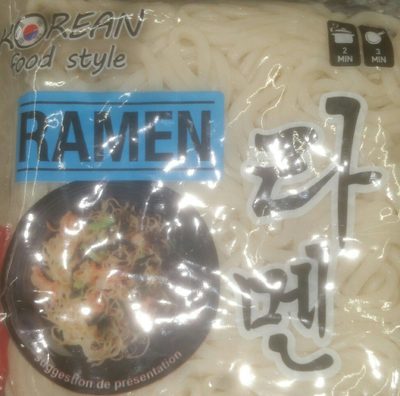
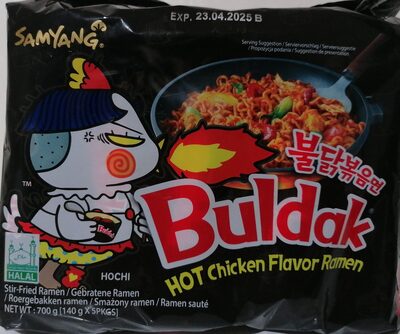
Nutrition per 100 g
| Nutrient | Ramen | Samyang original buldak spic... |
|---|---|---|
| Nutri-Score | b | — |
| NOVA group | 4 | 4 |
| Calories | 167 kcal | 400 kcal |
| Fat | 1.6 g | 12.9 g |
| Saturated fat | 0.1 g | 5 g |
| Sugars | 0.1 g | 5 g |
| Salt | 0.3 g | 3 g |
| Fiber | — | 1.4 g |
| Protein | 4.9 g | 10 g |
| Additives | 4 | 10 |
| Allergens | Gluten, Soybeans | Celery, Gluten, Sesame seeds, Soybeans |
Green = better value for that nutrient (less sugar, fat, salt and calories; more fiber and protein).
Key differences
- Ramen has 58% fewer calories (167 kcal vs 400 kcal).
- Ramen has 88% less fat (1.6 g vs 12.9 g).
- Ramen has 98% less saturated fat (0.1 g vs 5 g).
- Ramen has 98% less sugar (0.1 g vs 5 g).
- Ramen has 90% less salt (0.3 g vs 3 g).
- Samyang original buldak spicy ramen has 51% more protein (10 g vs 4.9 g).
- Only Samyang original buldak spicy ramen lists: Celery, Sesame seeds.
Ingredients
Ramen
MAMEN *Iles Ramen précuites : farine de blé, eau, amidon modifie, gluten de blé. correcteur d'acidite: acide lat!quet sel, huile de [ant: sorbitol, émulsifiants: lécithine de soja, mono-et diglycérideq cjqacldes gras).
Samyang original buldak spicy ramen
Noodle (76.7%): Wheat flour, Thickener: (E1420, E412), Palm oil, Wheat gluten, Salt, Emulsifier: [E422, E322 (Contains: Soy)], Soybean oil, Acidity regulator: (E501, E500, E339, E330), Water, Tocopherol powder (Contains Soy), Green tea extract, Colour : E101 Soup (22.7%): Water, Artificial chicken flavour (Contains: Gluten, Soy, Celery), Soy sauce, Sugar, Habanero pepper, Chili pepper, Soybean oil, Onion, Chili pepper seed oil, Garlic, Thickener: E1420, Chili pepper oleoresin, Colour : E160c, Black pepper, Curry seasoning (Contains: Celery) Flake (0.6%): Roasted sesame, Roasted laver
FAQ
Which is healthier: Ramen or Samyang original buldak spicy ramen?
Overall, Ramen has the better nutritional profile on the measures we compare. We compare Nutri-Score, processing level and seven nutrients per 100 g. Your own needs (for example low sugar or high protein) may make a different choice better for you.
Which has fewer calories?
Ramen has fewer calories: 167 kcal versus 400 kcal per 100 g.
Which has less sugar?
Ramen has less sugar: 0.1 g versus 5 g per 100 g.