
Pinsa vs Pinsa romana
Overall, Pinsa romana has the better nutritional profile on the measures we compare. It wins on 6 of our comparison points versus 1.
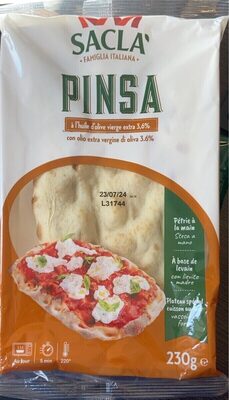
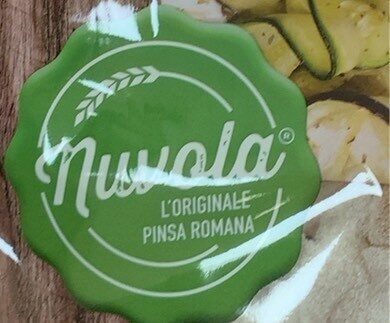
Nutrition per 100 g
| Nutrient | Pinsa | Pinsa romana |
|---|---|---|
| Nutri-Score | c | a |
| NOVA group | 4 | 3 |
| Calories | 247 kcal | 239 kcal |
| Fat | 3.5 g | 5.3 g |
| Saturated fat | 0.6 g | 0.6 g |
| Sugars | 0.4 g | 0.4 g |
| Salt | 1.4 g | 1 g |
| Fiber | 1.3 g | 8.5 g |
| Protein | 7.6 g | 9.5 g |
| Additives | 2 | 0 |
| Allergens | Gluten | Gluten |
Green = better value for that nutrient (less sugar, fat, salt and calories; more fiber and protein).
Key differences
- Pinsa has 34% less fat (3.5 g vs 5.3 g).
- Pinsa romana has 26% less salt (1 g vs 1.4 g).
- Pinsa romana has 85% more fiber (8.5 g vs 1.3 g).
- Pinsa romana has 20% more protein (9.5 g vs 7.6 g).
- Pinsa romana has the better Nutri-Score.
- Pinsa romana is less processed (lower NOVA group).
Ingredients
Pinsa
Levain 47% (farine de BLÉ tendre, eau, levure), farine de BLÉ tendre, Eau, Huile d'olive extra vierge 3,6%, Sel, Farine de riz, Levure de bière, Conservateurs: Propionate de calcium, Sorbate de potassium, Farine de BLÉ malté, Arôme. Peut contenir du SOJA et de la MOUTARDE.. Conditionné sous atmosphère protectrice. À CONSOMMER APRÈS CUISSON. Farine moulue en Italie à partir de BLÉ tendre origine UE et non UE.
Pinsa romana
Farina di frumento 0, acqua, pasta soda di frumento (15%), olio extravergine di of va farina di riso, farina integrale di segale Tipo 21 semi di lino, semi di girasole, semi di zucca, farina di orso, farina di avena, farina di malto
FAQ
Which is healthier: Pinsa or Pinsa romana?
Overall, Pinsa romana has the better nutritional profile on the measures we compare. We compare Nutri-Score, processing level and seven nutrients per 100 g. Your own needs (for example low sugar or high protein) may make a different choice better for you.
Which has fewer calories?
Pinsa romana has fewer calories: 239 kcal versus 247 kcal per 100 g.
Which has less sugar?
Pinsa has less sugar: 0.4 g versus 0.4 g per 100 g.