
Pataks On the Side Lime Pickle vs Patak's Madras Spice Paste
Neither product is clearly better overall — it depends on what matters most to you.
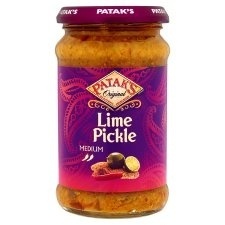
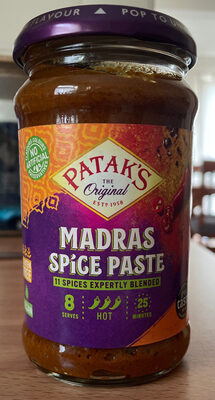
Nutrition per 100 g
| Nutrient | Pataks On the Side Lime Pick... | Patak's Madras Spice Paste |
|---|---|---|
| Nutri-Score | e | — |
| NOVA group | 3 | 3 |
| Calories | 187 kcal | 279 kcal |
| Fat | 16.9 g | 23.1 g |
| Saturated fat | 1.2 g | 1.7 g |
| Sugars | 2.2 g | 1.3 g |
| Salt | 8.9 g | 4.7 g |
| Fiber | — | 6.4 g |
| Protein | 2.3 g | 4.4 g |
| Additives | 1 | 2 |
| Allergens | Mustard | Mustard |
Green = better value for that nutrient (less sugar, fat, salt and calories; more fiber and protein).
Key differences
- Pataks On the Side Lime Pickle has 33% fewer calories (187 kcal vs 279 kcal).
- Pataks On the Side Lime Pickle has 27% less fat (16.9 g vs 23.1 g).
- Pataks On the Side Lime Pickle has 29% less saturated fat (1.2 g vs 1.7 g).
- Patak's Madras Spice Paste has 41% less sugar (1.3 g vs 2.2 g).
- Patak's Madras Spice Paste has 47% less salt (4.7 g vs 8.9 g).
- Patak's Madras Spice Paste has 48% more protein (4.4 g vs 2.3 g).
Ingredients
Pataks On the Side Lime Pickle
Limes (66%), Rapeseed Oil, Salt, Ground Spices (3%) [Spices, Paprika, MUSTARD), Acid (Acetic Acid), Cracked Yellow MUSTARD Seed (2%), Cracked Fenugreek Seed
Patak's Madras Spice Paste
Water, Ground Spices (24%), [Coriander (7%), Paprika (4%), Cardamom, Cumin, Spices, Fenugreek, Black Pepper, Ginger], Rapeseed Oil, Salt, Maize Flour, Acids (Acetic Acid, Citric Acid), Tamarind, MUSTARD Powder, Dried Crushed Red Chilli, Garlic Powder, Black MUSTARD Seed.
FAQ
Which is healthier: Pataks On the Side Lime Pickle or Patak's Madras Spice Paste?
Neither product is clearly better overall — it depends on what matters most to you. We compare Nutri-Score, processing level and seven nutrients per 100 g. Your own needs (for example low sugar or high protein) may make a different choice better for you.
Which has fewer calories?
Pataks On the Side Lime Pickle has fewer calories: 187 kcal versus 279 kcal per 100 g.
Which has less sugar?
Patak's Madras Spice Paste has less sugar: 1.3 g versus 2.2 g per 100 g.