
Milk Biscuit vs Crunchy au lait
Overall, Crunchy au lait has the better nutritional profile on the measures we compare. It wins on 3 of our comparison points versus 2.
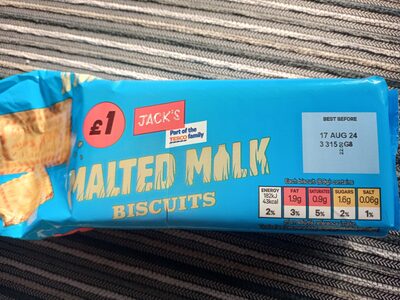
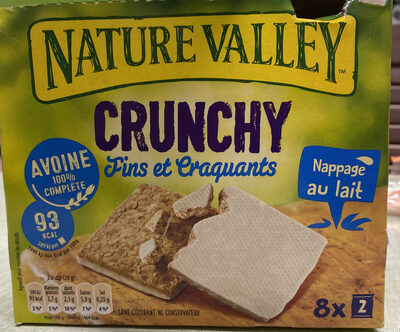
Nutrition per 100 g
| Nutrient | Milk Biscuit | Crunchy au lait |
|---|---|---|
| Nutri-Score | e | e |
| NOVA group | 4 | 4 |
| Calories | 488 kcal | 464 kcal |
| Fat | 21 g | 18.5 g |
| Saturated fat | 9.9 g | 10.5 g |
| Sugars | 18 g | 29.6 g |
| Salt | 0.6 g | 1.3 g |
| Fiber | 1.6 g | 6.2 g |
| Protein | 6.7 g | 7.8 g |
| Additives | 4 | 4 |
| Allergens | Gluten, Milk | Gluten, Milk |
Green = better value for that nutrient (less sugar, fat, salt and calories; more fiber and protein).
Key differences
- Crunchy au lait has 12% less fat (18.5 g vs 21 g).
- Milk Biscuit has 39% less sugar (18 g vs 29.6 g).
- Milk Biscuit has 50% less salt (0.6 g vs 1.3 g).
- Crunchy au lait has 74% more fiber (6.2 g vs 1.6 g).
- Crunchy au lait has 14% more protein (7.8 g vs 6.7 g).
Ingredients
Milk Biscuit
Wheat Flour (contains Calcium Carbonate, Iron, Nicotinamide, Thiamin), Palm Oil, Sugar, Barley Malt Extract, Dried Whole Milk, Raising Agent (Ammonium Bicarbonate, Sodium Bicarbonate), Salt, Flavouring. Allergy Advice For allergens, including cereals containing gluten, see ingredients in bold. Suitable for Vegetarians
Crunchy au lait
Flocons d'avoine complète (34,8%), sucre, huile de palme, farine de blé complet (11,9%), poudre de lait entier (3,1%), farine d'avoine complète (3%), sirop de sucre inverti, poudre de lait fermenté (0,8%), sel de cuisine, poudre à lever (bicarbonate de sodium), arôme naturel, émulsifiant (lécithines (blé)), acidifiant (acide citrique).
FAQ
Which is healthier: Milk Biscuit or Crunchy au lait?
Overall, Crunchy au lait has the better nutritional profile on the measures we compare. We compare Nutri-Score, processing level and seven nutrients per 100 g. Your own needs (for example low sugar or high protein) may make a different choice better for you.
Which has fewer calories?
Crunchy au lait has fewer calories: 464 kcal versus 488 kcal per 100 g.
Which has less sugar?
Milk Biscuit has less sugar: 18 g versus 29.6 g per 100 g.