
Comparison
Haricots Rouges vs Haricots rouges kidney bio
Neither product is clearly better overall — it depends on what matters most to you.
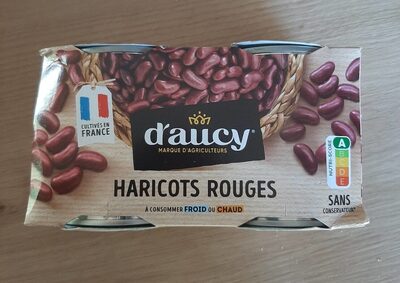
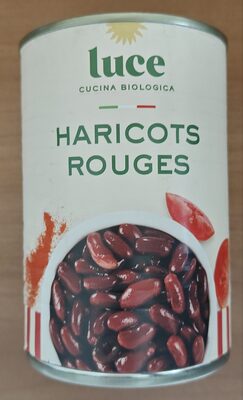
Nutrition per 100 g
| Nutrient | Haricots Rouges | Haricots rouges kidney bio |
|---|---|---|
| Nutri-Score | b | b |
| NOVA group | 4 | 3 |
| Calories | 96 kcal | 101 kcal |
| Fat | 0.7 g | 0.6 g |
| Saturated fat | 0.1 g | 0 g |
| Sugars | 0.5 g | 1.2 g |
| Salt | 0.5 g | 0.6 g |
| Fiber | 6.5 g | 6.2 g |
| Protein | 7.2 g | 7.2 g |
| Additives | 1 | 0 |
| Allergens | None listed | None listed |
Green = better value for that nutrient (less sugar, fat, salt and calories; more fiber and protein).
Key differences
- Haricots Rouges has 58% less sugar (0.5 g vs 1.2 g).
- Haricots rouges kidney bio is less processed (lower NOVA group).
Ingredients
Haricots Rouges
Eau, haricots rouges, sel, affermissant : chlorure de calcium. Peut contenir des traces de soja
Haricots rouges kidney bio
Haricots rouges Kidney, eau, sel de mer.
FAQ
Which is healthier: Haricots Rouges or Haricots rouges kidney bio?
Neither product is clearly better overall — it depends on what matters most to you. We compare Nutri-Score, processing level and seven nutrients per 100 g. Your own needs (for example low sugar or high protein) may make a different choice better for you.
Which has fewer calories?
Haricots Rouges has fewer calories: 96 kcal versus 101 kcal per 100 g.
Which has less sugar?
Haricots Rouges has less sugar: 0.5 g versus 1.2 g per 100 g.
More comparisons
Red Kidney Beans vs Haricots Rouges
Red Kidney Beans vs Haricots rouges kidney b...
Haricots rouges d'aucy 5... vs Haricots Rouges
Haricots rouges d'aucy 5... vs Haricots rouges kidney b...
Haricots Rouges vs Haricots rouges - Boîte...
Haricots rouges - Boîte... vs Haricots rouges kidney b...
Haricots Rouges vs Alubia roja
Haricots rouges kidney b... vs Alubia roja