
Gemüselasagne vs Vegetable Lasagna
Overall, Vegetable Lasagna has the better nutritional profile on the measures we compare. It wins on 4 of our comparison points versus 1.
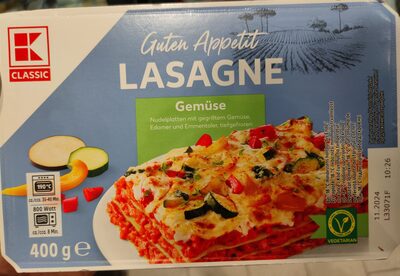

Nutrition per 100 g
| Nutrient | Gemüselasagne | Vegetable Lasagna |
|---|---|---|
| Nutri-Score | c | c |
| NOVA group | — | 3 |
| Calories | 150 kcal | 122 kcal |
| Fat | 7 g | 5.3 g |
| Saturated fat | 1.9 g | 2.4 g |
| Sugars | 3.3 g | 2.4 g |
| Salt | 0.7 g | 0.7 g |
| Fiber | 2 g | 1.9 g |
| Protein | 4.6 g | 5.6 g |
| Additives | 0 | 0 |
| Allergens | None listed | Celery, Eggs, Gluten, Milk, Soybeans |
Green = better value for that nutrient (less sugar, fat, salt and calories; more fiber and protein).
Key differences
- Vegetable Lasagna has 19% fewer calories (122 kcal vs 150 kcal).
- Vegetable Lasagna has 24% less fat (5.3 g vs 7 g).
- Gemüselasagne has 21% less saturated fat (1.9 g vs 2.4 g).
- Vegetable Lasagna has 27% less sugar (2.4 g vs 3.3 g).
- Vegetable Lasagna has 18% more protein (5.6 g vs 4.6 g).
- Only Vegetable Lasagna lists: Celery, Eggs, Gluten, Milk, Soybeans.
Ingredients
Gemüselasagne
Not available.
Vegetable Lasagna
Milk, mushrooms, egg pasta (durum wheat semolina, water, free-range egg), tomatoes, red wine, red peppers, Cheddar cheese (milk), lentils, carrots, onions, aubergine, courgettes, yellow peppers, tomato purée, butter (milk), wheat flour (wheat flour, calcium carbonate, iron, niacin, thiamin), honey, mozzarella cheese (milk), soy sauce (water, soya beans, wheat, salt), celery, salt, white wine vinegar, cornflour, rapeseed oil, parsley, garlic purée, dried oregano, ground star anise, ground nutmeg.
FAQ
Which is healthier: Gemüselasagne or Vegetable Lasagna?
Overall, Vegetable Lasagna has the better nutritional profile on the measures we compare. We compare Nutri-Score, processing level and seven nutrients per 100 g. Your own needs (for example low sugar or high protein) may make a different choice better for you.
Which has fewer calories?
Vegetable Lasagna has fewer calories: 122 kcal versus 150 kcal per 100 g.
Which has less sugar?
Vegetable Lasagna has less sugar: 2.4 g versus 3.3 g per 100 g.