
Fromage d’Abbaye vs Abbaye Postel mi-vieux / belegen
Overall, Fromage d’Abbaye has the better nutritional profile on the measures we compare. It wins on 7 of our comparison points versus 1.
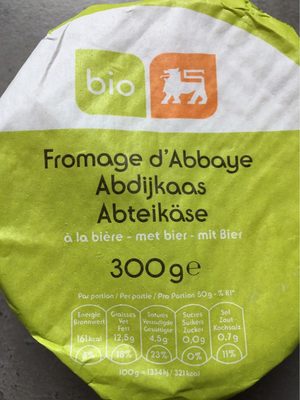
Fromage d’Abbaye
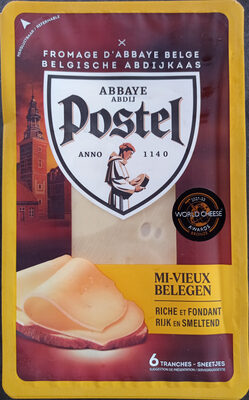
Abbaye Postel mi-vieux / belegen
Nutrition per 100 g
| Nutrient | Fromage d’Abbaye | Abbaye Postel mi-vieux / bel... |
|---|---|---|
| Nutri-Score | c | d |
| NOVA group | — | 3 |
| Calories | 113 kcal | 396 kcal |
| Fat | 12.5 g | 32 g |
| Saturated fat | 4.5 g | 22 g |
| Sugars | 0 g | 0.5 g |
| Salt | 0.7 g | 1.8 g |
| Fiber | 0 g | — |
| Protein | 0 g | 27 g |
| Additives | 0 | 0 |
| Allergens | Milk | Milk |
Green = better value for that nutrient (less sugar, fat, salt and calories; more fiber and protein).
Key differences
- Fromage d’Abbaye has 71% fewer calories (113 kcal vs 396 kcal).
- Fromage d’Abbaye has 61% less fat (12.5 g vs 32 g).
- Fromage d’Abbaye has 80% less saturated fat (4.5 g vs 22 g).
- Fromage d’Abbaye has no sugar, while Abbaye Postel mi-vieux / belegen has 0.5 g.
- Fromage d’Abbaye has 61% less salt (0.7 g vs 1.8 g).
- Abbaye Postel mi-vieux / belegen has 100% more protein (27 g vs 0 g).
- Fromage d’Abbaye has the better Nutri-Score.
Ingredients
Fromage d’Abbaye
lait de vache pasteurisé standardisé*, sel, présure traditionnelle, dérivé de houblon, ferments lactiques. bière en affinage 0,01% (croûte gluten).
Abbaye Postel mi-vieux / belegen
Lait de vache pasteurisé** (Origine : Belgique), sel, ferments lactiques, coagulant microbien. 32 g de matière grasse dans 100 g de fromage. Croûte naturelle comestible. Fabriqué dans un atelier utilisant du lait de vache et du lait de chèvre. ** Issu de vaches nourries sans OGM (<0,9%).
FAQ
Which is healthier: Fromage d’Abbaye or Abbaye Postel mi-vieux / belegen?
Overall, Fromage d’Abbaye has the better nutritional profile on the measures we compare. We compare Nutri-Score, processing level and seven nutrients per 100 g. Your own needs (for example low sugar or high protein) may make a different choice better for you.
Which has fewer calories?
Fromage d’Abbaye has fewer calories: 113 kcal versus 396 kcal per 100 g.
Which has less sugar?
Fromage d’Abbaye has less sugar: 0 g versus 0.5 g per 100 g.