
EVERYTHING Crackers vs Melba
Overall, Melba has the better nutritional profile on the measures we compare. It wins on 9 of our comparison points versus 0.
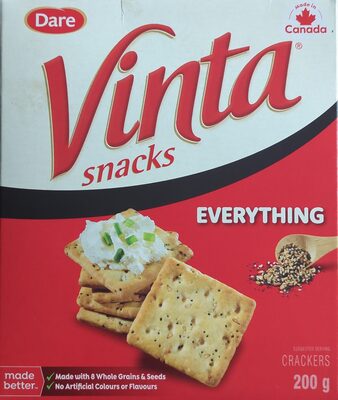
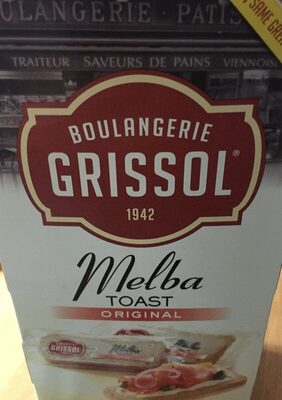
Nutrition per 100 g
| Nutrient | EVERYTHING Crackers | Melba |
|---|---|---|
| Nutri-Score | e | c |
| NOVA group | 4 | 3 |
| Calories | 450 kcal | 381 kcal |
| Fat | 20 g | 9.5 g |
| Saturated fat | 5 g | 0 g |
| Sugars | 5 g | 4.8 g |
| Salt | 2.4 g | 1.8 g |
| Fiber | 5 g | 6.4 g |
| Protein | 5 g | 9.5 g |
| Additives | 6 | 0 |
| Allergens | Gluten, Milk, Mustard, Sesame seeds, Soybeans | Gluten |
Green = better value for that nutrient (less sugar, fat, salt and calories; more fiber and protein).
Key differences
- Melba has 15% fewer calories (381 kcal vs 450 kcal).
- Melba has 52% less fat (9.5 g vs 20 g).
- Melba has no saturated fat, while EVERYTHING Crackers has 5 g.
- Melba has 25% less salt (1.8 g vs 2.4 g).
- Melba has 22% more fiber (6.4 g vs 5 g).
- Melba has 47% more protein (9.5 g vs 5 g).
- Melba has the better Nutri-Score.
- Melba is less processed (lower NOVA group).
- Only EVERYTHING Crackers lists: Milk, Mustard, Sesame seeds, Soybeans.
Ingredients
EVERYTHING Crackers
Wheat flour, vegetable oil (contains modified palm oil), whole seeds and grains (sesame seeds, poppy seeds, mustard seeds, millet, flax seeds), malted barley flour, wheat flakes, rye flakes, rolled oats, cane sugar, salt, vinegar, dried onion, dried roasted garlic, whey powder, ammonium bicarbonate, baking soda, spices, natural flavour, soya lecithin
Melba
Farine de blé, Sucre de canne, Huile de tournesol à teneur élevée en acide oléique, Sel, Levure. Contient : Blé. Peut contenir: Soya, Graines de sésame.
FAQ
Which is healthier: EVERYTHING Crackers or Melba?
Overall, Melba has the better nutritional profile on the measures we compare. We compare Nutri-Score, processing level and seven nutrients per 100 g. Your own needs (for example low sugar or high protein) may make a different choice better for you.
Which has fewer calories?
Melba has fewer calories: 381 kcal versus 450 kcal per 100 g.
Which has less sugar?
Melba has less sugar: 4.8 g versus 5 g per 100 g.