
Comparison
Delpierre vs Salmón al natural
Overall, Salmón al natural has the better nutritional profile on the measures we compare. It wins on 6 of our comparison points versus 1.
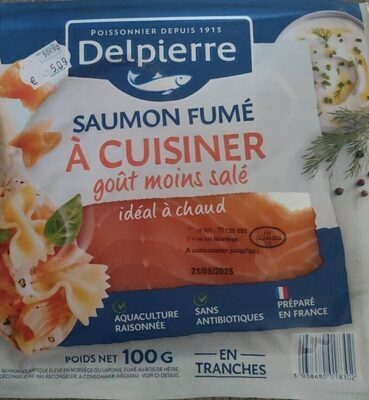
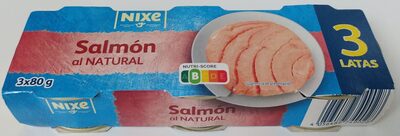
Nutrition per 100 g
| Nutrient | Delpierre | Salmón al natural |
|---|---|---|
| Nutri-Score | d | a |
| NOVA group | — | 3 |
| Calories | 188 kcal | 136 kcal |
| Fat | 12 g | 7.7 g |
| Saturated fat | 1.6 g | 1.2 g |
| Sugars | 0 g | 0 g |
| Salt | 1.8 g | 0.8 g |
| Fiber | — | 0 g |
| Protein | 20 g | 16 g |
| Additives | 0 | 0 |
| Allergens | None listed | Fish |
Green = better value for that nutrient (less sugar, fat, salt and calories; more fiber and protein).
Key differences
- Salmón al natural has 28% fewer calories (136 kcal vs 188 kcal).
- Salmón al natural has 36% less fat (7.7 g vs 12 g).
- Salmón al natural has 25% less saturated fat (1.2 g vs 1.6 g).
- Salmón al natural has 56% less salt (0.8 g vs 1.8 g).
- Delpierre has 20% more protein (20 g vs 16 g).
- Salmón al natural has the better Nutri-Score.
- Only Salmón al natural lists: Fish.
Ingredients
Delpierre
Not available.
Salmón al natural
_Salmón_ (Salmo salar) (_pescado_), agua, sal. Puede contener trazas de _moluscos_ y _crustáceos_.
FAQ
Which is healthier: Delpierre or Salmón al natural?
Overall, Salmón al natural has the better nutritional profile on the measures we compare. We compare Nutri-Score, processing level and seven nutrients per 100 g. Your own needs (for example low sugar or high protein) may make a different choice better for you.
Which has fewer calories?
Salmón al natural has fewer calories: 136 kcal versus 188 kcal per 100 g.
Which has less sugar?
Delpierre has less sugar: 0 g versus 0 g per 100 g.
More comparisons
Filet Saumon sauce citro... vs Delpierre
Delpierre vs Lomo de salmón
2 portions de saumon ros... vs Delpierre
Delpierre vs Saumon rose du Pacifique
Scottish Salmon Fishcake... vs Delpierre
Delpierre vs Saumon pas fumé
2 portions de saumon ros... vs Salmón al natural
Filet Saumon sauce citro... vs Salmón al natural