
Dairy Whipped Topping vs Spray Pan topping
Overall, Dairy Whipped Topping has the better nutritional profile on the measures we compare. It wins on 6 of our comparison points versus 0.
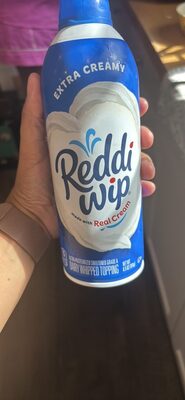

Nutrition per 100 g
| Nutrient | Dairy Whipped Topping | Spray Pan topping |
|---|---|---|
| Nutri-Score | d | e |
| NOVA group | 4 | 4 |
| Calories | 220 kcal | 282 kcal |
| Fat | 20 g | 23 g |
| Saturated fat | 10 g | 22 g |
| Sugars | 10 g | 18 g |
| Salt | 0 g | 0.2 g |
| Fiber | 0 g | — |
| Protein | 0 g | 0 g |
| Additives | 3 | 16 |
| Allergens | Milk | Soybeans |
Green = better value for that nutrient (less sugar, fat, salt and calories; more fiber and protein).
Key differences
- Dairy Whipped Topping has 22% fewer calories (220 kcal vs 282 kcal).
- Dairy Whipped Topping has 13% less fat (20 g vs 23 g).
- Dairy Whipped Topping has 55% less saturated fat (10 g vs 22 g).
- Dairy Whipped Topping has 44% less sugar (10 g vs 18 g).
- Dairy Whipped Topping has the better Nutri-Score.
- Only Dairy Whipped Topping lists: Milk.
- Only Spray Pan topping lists: Soybeans.
Ingredients
Dairy Whipped Topping
Heavy Cream, Water, Sugar, Nonfat Milk, Tapioca Maltodextrin, Mono - and Diglycerides, Carrageenan, Natural Flavor, Propellant: Nitrous Oxide.
Spray Pan topping
Eau, Graisses végétales (palme et palmiste) (22%), Sucre (18%), Stabilisants: Sirop de sorbitol, E464, E463, Guar gomme, gomme xanthane, gomme de caroube, Emulsifiants : E435, E481, lécithine de soja (E322), E471; E339, E331, Arôme, Sel, Colorant: Carotène (E160a), Gaz puiseur : Protoxyde d'azote (E942)
FAQ
Which is healthier: Dairy Whipped Topping or Spray Pan topping?
Overall, Dairy Whipped Topping has the better nutritional profile on the measures we compare. We compare Nutri-Score, processing level and seven nutrients per 100 g. Your own needs (for example low sugar or high protein) may make a different choice better for you.
Which has fewer calories?
Dairy Whipped Topping has fewer calories: 220 kcal versus 282 kcal per 100 g.
Which has less sugar?
Dairy Whipped Topping has less sugar: 10 g versus 18 g per 100 g.