
Cuisse de dinde vs Indyk w sosie maślano-koperkowym
Overall, Cuisse de dinde has the better nutritional profile on the measures we compare. It wins on 5 of our comparison points versus 0.
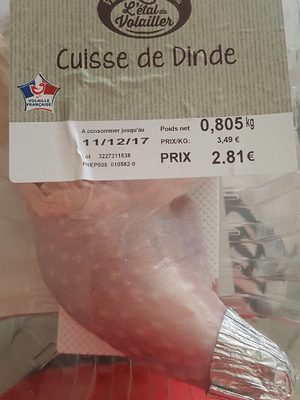
Cuisse de dinde
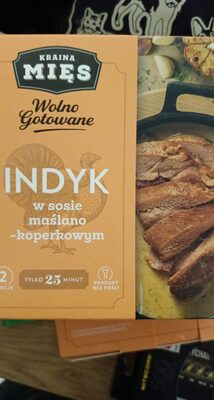
Indyk w sosie maślano-koperkowym
Nutrition per 100 g
| Nutrient | Cuisse de dinde | Indyk w sosie maślano-koperk... |
|---|---|---|
| Nutri-Score | a | b |
| NOVA group | — | 4 |
| Calories | 171 kcal | 165 kcal |
| Fat | 10 g | 9.2 g |
| Saturated fat | 2.8 g | 4.2 g |
| Sugars | 0.5 g | 0.9 g |
| Salt | 0.2 g | 0.7 g |
| Fiber | — | 1.1 g |
| Protein | 20 g | 19 g |
| Additives | 0 | 0 |
| Allergens | None listed | Milk |
Green = better value for that nutrient (less sugar, fat, salt and calories; more fiber and protein).
Key differences
- Cuisse de dinde has 33% less saturated fat (2.8 g vs 4.2 g).
- Cuisse de dinde has 44% less sugar (0.5 g vs 0.9 g).
- Cuisse de dinde has 75% less salt (0.2 g vs 0.7 g).
- Cuisse de dinde has the better Nutri-Score.
- Only Indyk w sosie maślano-koperkowym lists: Milk.
Ingredients
Cuisse de dinde
Culsse de dlnde 1è0àc dinde (origine France). Produit frais - clase A. CONSERVATION
Indyk w sosie maślano-koperkowym
mięso z indyka 74 %, sos maślano-koperkowy 26 % (woda, mleko w proszku (laktoza), skrobia, masło (mleko) 11,4 %, sól, przyprawy, ekstrakty przypraw, aromaty (laktoza), błonniki roślinne, hydrolizat białka kukurydzianego, skrobia kukurydziana, koperek 2 %)
FAQ
Which is healthier: Cuisse de dinde or Indyk w sosie maślano-koperkowym?
Overall, Cuisse de dinde has the better nutritional profile on the measures we compare. We compare Nutri-Score, processing level and seven nutrients per 100 g. Your own needs (for example low sugar or high protein) may make a different choice better for you.
Which has fewer calories?
Indyk w sosie maślano-koperkowym has fewer calories: 165 kcal versus 171 kcal per 100 g.
Which has less sugar?
Cuisse de dinde has less sugar: 0.5 g versus 0.9 g per 100 g.