
Barre Pomme Myrtille avec arôme naturel vs Banana
Overall, Banana has the better nutritional profile on the measures we compare. It wins on 4 of our comparison points versus 3.
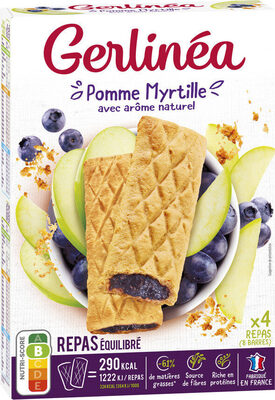
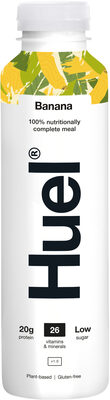
Nutrition per 100 g
| Nutrient | Barre Pomme Myrtille avec ar... | Banana |
|---|---|---|
| Nutri-Score | — | — |
| NOVA group | 4 | 4 |
| Calories | 324 kcal | 80 kcal |
| Fat | 6.4 g | 3.8 g |
| Saturated fat | 0.6 g | 1 g |
| Sugars | 21 g | 0.3 g |
| Salt | 0.7 g | 0.1 g |
| Fiber | 4.1 g | 1.4 g |
| Protein | 25 g | 4 g |
| Additives | 4 | 5 |
| Allergens | Gluten, Milk, Soybeans | None listed |
Green = better value for that nutrient (less sugar, fat, salt and calories; more fiber and protein).
Key differences
- Banana has 75% fewer calories (80 kcal vs 324 kcal).
- Banana has 41% less fat (3.8 g vs 6.4 g).
- Barre Pomme Myrtille avec arôme naturel has 40% less saturated fat (0.6 g vs 1 g).
- Banana has 98% less sugar (0.3 g vs 21 g).
- Banana has 85% less salt (0.1 g vs 0.7 g).
- Barre Pomme Myrtille avec arôme naturel has 65% more fiber (4.1 g vs 1.4 g).
- Barre Pomme Myrtille avec arôme naturel has 84% more protein (25 g vs 4 g).
- Only Barre Pomme Myrtille avec arôme naturel lists: Gluten, Milk, Soybeans.
Ingredients
Barre Pomme Myrtille avec arôme naturel
Pommes 44,2%, sirop de glucose, sucre, farine de blé, protéines de blé, myrtilles 7,4%, huile de colza, humectant: glycérol d'origine végétale, protéines de soja, protéines de pois, protéines de blé hydrolysées, minéraux (potassium, magnésium, calcium, zinc, fer, manganèse, cuivre, iode, sélénium), amidon de blé, fécule de tapioca, poudres à lever (acide citrique, carbonates de sodium), jus concentré de citron, arôme naturel de framboise avec autres arômes naturels, correcteur d'acidité : citrates de calcium, levure désactivée, arôme naturel de cassis avec autres arômes naturels, cannelle, vitamines A, B1, B2, B5, B6, B9, B12, C, D, H, K, PP et E, jus concentré de carotte, arôme naturel, sel. Fabriqué dans un atelier qui utilise : fruits à coque, lupin, lait, oeuf et sésame.
Banana
Water, Pea Protein, Tapioca Starch, Rapeseed Oil, Gluten-Free Oat Flour, Ground Flaxseed, Medium-Chain Triglyceride Powder (from Coconut), Soluble Vegetable Fibre (Chicory, Corn), Micronutrient Blend (Minerals (Potassium (as Potassium Citrate, Potassium Chloride), Chloride, Calcium (as Calcium Carbonate), Magnesium (as Magnesium Citrate), Phosphorus (as Magnesium Phosphate), Copper (as Copper Gluconate), Zinc (as Zinc Oxide), Iodine (as Potassium Iodide), Chromium (as Chromium Picolinate)), Vitamins (Vitamin C (as L-Ascorbic Acid), Vitamin K (K2, as Menaquinone-7), Vitamin E (as D-Alpha Tocopherol Acetate), Vitamin A (as Retinyl Acetate), Niacin (as Niacinamide), Vitamin D (D2, as Ergocalciferol), Vitamin B12 (as Cyanocobalamin), Pantothenic Acid (as Calcium-D-Pantothenate), Biotin (as D-Biotin), Vitamin B6 (as Pyridoxine Hydrochloride), Vitamin B2 (as Riboflavin), Vitamin B1 (as Thiamine Mononitrate), Folate (as Calcium-L Methylfolate)), Choline), Natural Flavourings, Brown Rice Flour, Emulsifier: Sunflower Lecithin, Turmeric Extract, Thickener: Gellan Gum, Sweetener: Sucralose
FAQ
Which is healthier: Barre Pomme Myrtille avec arôme naturel or Banana?
Overall, Banana has the better nutritional profile on the measures we compare. We compare Nutri-Score, processing level and seven nutrients per 100 g. Your own needs (for example low sugar or high protein) may make a different choice better for you.
Which has fewer calories?
Banana has fewer calories: 80 kcal versus 324 kcal per 100 g.
Which has less sugar?
Banana has less sugar: 0.3 g versus 21 g per 100 g.