
Albóndigas de cerdo vs Albóndigas de pollo
Overall, Albóndigas de pollo has the better nutritional profile on the measures we compare. It wins on 6 of our comparison points versus 2.

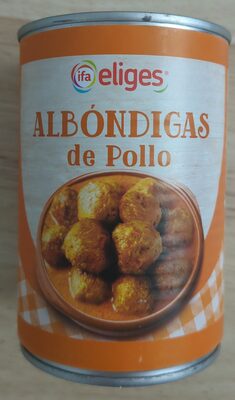
Nutrition per 100 g
| Nutrient | Albóndigas de cerdo | Albóndigas de pollo |
|---|---|---|
| Nutri-Score | e | c |
| NOVA group | — | 4 |
| Calories | 267 kcal | 111 kcal |
| Fat | 21 g | 5.5 g |
| Saturated fat | 8 g | 1.2 g |
| Sugars | 1 g | 2 g |
| Salt | 2 g | 1.6 g |
| Protein | 14 g | 8.5 g |
| Additives | 0 | 2 |
| Allergens | None listed | Eggs, Soybeans |
Green = better value for that nutrient (less sugar, fat, salt and calories; more fiber and protein).
Key differences
- Albóndigas de pollo has 58% fewer calories (111 kcal vs 267 kcal).
- Albóndigas de pollo has 74% less fat (5.5 g vs 21 g).
- Albóndigas de pollo has 85% less saturated fat (1.2 g vs 8 g).
- Albóndigas de cerdo has 50% less sugar (1 g vs 2 g).
- Albóndigas de pollo has 20% less salt (1.6 g vs 2 g).
- Albóndigas de cerdo has 39% more protein (14 g vs 8.5 g).
- Albóndigas de pollo has the better Nutri-Score.
- Only Albóndigas de pollo lists: Eggs, Soybeans.
Ingredients
Albóndigas de cerdo
Not available.
Albóndigas de pollo
Albóndigas (carne de pollo (52%), agua, pan rallado sin gluten (harina de arroz, dextrosa, fibra vegetal, sal y emulgente (E 471)), fécula de patata, aceite de girasol, proteína de soja, huevo, sal, caldo de pollo (almidón de maíz, extractos de levadura, aceite de girasol, maltodextrina, pollo, azúcar, aromas y especias). Salsa (agua, tomate, zanahoria, cebolla, aceite de girasol, almidón modificado, azúcar, sal y aroma).
FAQ
Which is healthier: Albóndigas de cerdo or Albóndigas de pollo?
Overall, Albóndigas de pollo has the better nutritional profile on the measures we compare. We compare Nutri-Score, processing level and seven nutrients per 100 g. Your own needs (for example low sugar or high protein) may make a different choice better for you.
Which has fewer calories?
Albóndigas de pollo has fewer calories: 111 kcal versus 267 kcal per 100 g.
Which has less sugar?
Albóndigas de cerdo has less sugar: 1 g versus 2 g per 100 g.