
5 rodzajów fasoli w sosie pomidorowym vs BEANZ in a rich tomato sauce
Neither product is clearly better overall — it depends on what matters most to you.
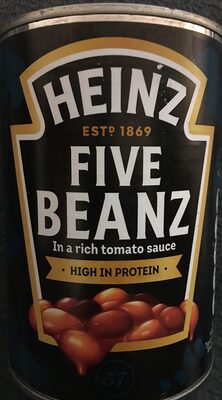

Nutrition per 100 g
| Nutrient | 5 rodzajów fasoli w sosie po... | BEANZ in a rich tomato sauce |
|---|---|---|
| Nutri-Score | a | a |
| NOVA group | 4 | 4 |
| Calories | 87 kcal | 66 kcal |
| Fat | 0.2 g | 0.2 g |
| Saturated fat | 0 g | 0.1 g |
| Sugars | 4.7 g | 1.9 g |
| Salt | 0.6 g | 0.4 g |
| Fiber | 4.3 g | 3.6 g |
| Protein | 5.4 g | 4.6 g |
| Additives | 0 | 1 |
| Allergens | None listed | None listed |
Green = better value for that nutrient (less sugar, fat, salt and calories; more fiber and protein).
Key differences
- BEANZ in a rich tomato sauce has 24% fewer calories (66 kcal vs 87 kcal).
- BEANZ in a rich tomato sauce has 60% less sugar (1.9 g vs 4.7 g).
- 5 rodzajów fasoli w sosie pomidorowym has 16% more fiber (4.3 g vs 3.6 g).
- 5 rodzajów fasoli w sosie pomidorowym has 15% more protein (5.4 g vs 4.6 g).
Ingredients
5 rodzajów fasoli w sosie pomidorowym
Mieszanka fasoli w zmiennych proporcjach 52% (fasola Haricot, fasola Pinto, fasola biała Cannellini, fasola Borlotti, fasola czerwona), pomidory 37%, woda, cukier, skrobia kukurydziana modyfikowana, ocet spirytusowy, sól, ekstrakty przypraw, ekstrakt ziołowy.
BEANZ in a rich tomato sauce
Beans (50%), Tomatoes (37%), Water, Modified Cornflour, Spirit Vinegar, Salt, Natural Flavouring, Spice Extracts, Sweetener - Steviol Glycosides, Herb Extract. Contains naturally occuring sugars.
FAQ
Which is healthier: 5 rodzajów fasoli w sosie pomidorowym or BEANZ in a rich tomato sauce?
Neither product is clearly better overall — it depends on what matters most to you. We compare Nutri-Score, processing level and seven nutrients per 100 g. Your own needs (for example low sugar or high protein) may make a different choice better for you.
Which has fewer calories?
BEANZ in a rich tomato sauce has fewer calories: 66 kcal versus 87 kcal per 100 g.
Which has less sugar?
BEANZ in a rich tomato sauce has less sugar: 1.9 g versus 4.7 g per 100 g.