
Lactic acid (E270)
Updated November 2, 2026
Lactic acid (E270) is the acid that makes yogurt, sourdough and sauerkraut sour, and food manufacturers use it the same way — to acidify, to control pH and to hold back spoilage bacteria. Regulators consider it one of the safest additives there is: the WHO/FAO expert committee set an acceptable daily intake of "not limited" and the US affirms it as GRAS with no numerical ceiling. There is exactly one restriction, and it is specific: US rules bar it from infant foods and infant formula, because very young babies handle some of its forms poorly.
Quick facts
- Also known as
- E270
- E-number
- E270
- Function
- Acids & acidity regulators
- US status
- Affirmed GRAS as a direct food ingredient (21 CFR 184.1061) for all uses except infant foods and infant formulas
- EU status
- Permitted as E270
- Acceptable daily intake
- Not limited (JECFA, 1973; reaffirmed as a flavouring agent in 2001). JECFA also advises that the D(-) and DL forms should not be used in infant foods
- Found in
- 34,685 products (18,610 sold in the US)
- Foodmetria concern level
- Low concern How we rate additives
What is Lactic acid?
Lactic acid is a small organic acid — US regulation names it 2-hydroxypropanoic acid, C3H6O3 — and the regulation itself notes that it "occurs naturally in several foods." It is the acid produced when lactic acid bacteria ferment sugars, which is why it is the defining sourness of yogurt, kefir, sourdough bread, sauerkraut, kimchi and cured sausage.
It comes in two mirror-image forms, and this matters more than it usually does with additives:
- L(+)-lactic acid — the form human metabolism is built around
- D(-)-lactic acid — the mirror image, handled less readily
- DL — a mixture of both
US regulation lists all three with separate CAS numbers, and permits two manufacturing routes: fermentation of carbohydrates "such as glucose, sucrose, or lactose," or a synthetic route that makes lactonitrile from acetaldehyde and hydrogen cyanide and then hydrolyses it. The synthetic route gives the DL mixture; fermentation can be steered to a single form depending on the organism used.
It is not a dairy ingredient, despite the name and despite lactose appearing on that list of possible substrates. The finished acid contains no milk protein and no lactose — see the FAQ below for the honest limits of what a label tells you.
Why is Lactic acid used in food?
Lactic acid does several jobs at once, which is why it appears across such different categories. The US regulation lists its permitted functions: antimicrobial agent, curing and pickling agent, flavour enhancer, flavouring agent and adjuvant, pH control agent, and solvent and vehicle.
In practice:
- Acidulant and pH control. It gives a rounder, milder sourness than citric acid — less sharp, more dairy-like — which suits beverages, dressings, confectionery and dairy products.
- Antimicrobial. Lowering pH slows or stops many spoilage organisms and pathogens. This is why it shows up in cured and processed meats, olives and pickles, and in packaged salads and prepared foods.
- Curing and pickling. It performs the same acidification that a fermentation would, but on a schedule, which is how a manufacturer gets a consistent product without waiting for cultures.
- Flavour. Small amounts sharpen other flavours and reinforce a fermented character in products that were not actually fermented.
Because it is cheap, familiar and effective at low concentrations, it is one of the most widely used acidulants in processed food — second only to citric acid in how often it appears in our database.
Is Lactic acid safe? What the research says
What regulators say. In the US, lactic acid is affirmed GRAS as a direct human food ingredient. The regulation sets no numerical levels: it is used at levels not exceeding current good manufacturing practice. It does not appear on FDA's list of chemicals under post-market review.
The WHO/FAO expert committee (JECFA) evaluated lactic acid and its ammonium, calcium, potassium and sodium salts in 1974 and concluded, in its own words, that "no limit need be set for the acceptable daily intake for man" — an ADI of "not limited." It looked at lactic acid again in 2001, this time as a flavouring agent, and recorded "no safety concern at current levels of intake."
The one real restriction, and the reason for it. US regulation permits lactic acid in food "except in infant foods and infant formulas." That exclusion is not a formality, and the reason is in the JECFA record from the same era: the committee stated that "neither D(-)-lactic acid nor (DL)-lactic acid should be used in infant foods," explaining that there is "some evidence that babies in their first three months of life have difficulties in utilizing small amounts" of those forms.
The concern is metabolic, not toxicological. Human enzymes are adapted to the L(+) form; the D(-) form is cleared more slowly, and a newborn's capacity to deal with it is not yet developed. In an older child or an adult this is a non-issue — the amounts in food are small and the metabolic machinery is mature. In a baby being fed nothing but formula in the first weeks of life, the margin is thinner, so the rule removes the question entirely.
Worth separating clearly: this is about added D(-) and DL lactic acid. It says nothing about the L(+) lactic acid that occurs naturally in fermented dairy, and it is not a reason to avoid yogurt.
The European picture. Lactic acid is permitted as E270 in the EU and the UK. We could not find a published EFSA re-evaluation of E270 as a food additive — it does not appear in the re-evaluation batches we checked, nor in the summary of the panel's active work presented in July 2026. Nor did we find an EU restriction on E270 in infant food matching the American one; the EU's infant formula regulation does not mention lactic acid at all. We are stating what we found rather than assuming the two systems match.
What there is no evidence for. Lactic acid in food is not the lactate that accumulates in muscles during hard exercise, and eating it has nothing to do with muscle soreness — that is a confusion of names. We found no regulatory basis for claims linking food-grade lactic acid to histamine intolerance, gut problems or acid–base disturbances in healthy people, so this page does not make them.
Lactic acid regulation: US vs EU
| Region | Status |
|---|---|
| United States | Affirmed GRAS as a direct human food ingredient (21 CFR 184.1061), used at levels not exceeding current good manufacturing practice, except in infant foods and infant formulas. No numerical levels. Not on FDA's post-market review list. |
| European Union | Permitted as E270. No published EFSA re-evaluation of the additive located as of November 2026. |
| United Kingdom | Permitted as E270. |
| JECFA (WHO/FAO) | ADI "not limited" (1974) for lactic acid and its ammonium, calcium, potassium and sodium salts, with the advice that neither D(-)- nor DL-lactic acid should be used in infant foods. Reviewed again as a flavouring agent in 2001: no safety concern at current intakes. |
Lactic acid is permitted in the US, the EU and the UK, with no ban or phase-out pending anywhere we checked, and none of the recent US state additive laws covers it.
The notable features are the infant food carve-out and the unusual quietness of the European file:
- United States. Affirmed GRAS (21 CFR 184.1061) for use as an antimicrobial, curing and pickling agent, flavour enhancer, flavouring agent and adjuvant, pH control agent, and solvent — at levels not exceeding current good manufacturing practice, and explicitly except in infant foods and infant formulas. Not on FDA's post-market review list, whose table was last updated in May 2026.
- European Union and United Kingdom. Permitted as E270. No published EFSA re-evaluation of the additive that we could locate as of November 2026.
- JECFA. ADI "not limited," set in 1974 for lactic acid and its ammonium, calcium, potassium and sodium salts, with the accompanying advice that the D(-) and DL forms should not be used in infant foods. Reconsidered as a flavouring agent in 2001 with no safety concern.
The absence of a modern EFSA opinion is worth noting without over-reading. Several long-standing additives — citric acid among them — are still covered by decades-old European assessments simply because the re-evaluation programme has not reached them. That is a paperwork backlog, not a finding.
Who should limit or avoid Lactic acid?
- Parents of very young babies. This is the group the rules single out. US regulation does not permit added lactic acid in infant foods or infant formula, and JECFA's reasoning is that babies in the first three months handle the D(-) and DL forms poorly. If you are reading a formula label and do not see lactic acid, that is why.
- Vegans and people avoiding dairy. Lactic acid itself is not a dairy ingredient and contains no milk protein or lactose. The honest caveat is that US regulation lists lactose among the carbohydrates that may be fermented to make it, and nothing requires the substrate to be declared — so the label alone cannot tell you. If a product contained a milk allergen, US allergen labelling would require it to be named, which is the check that actually protects a milk-allergic consumer.
- People avoiding "fermented" or histamine-rich foods. Added lactic acid is a purified acid, not a fermentation culture, and it is not the same thing as a fermented ingredient. We found no regulatory evidence connecting it to histamine intolerance, and this page does not claim any.
- Athletes and anyone who has heard of "lactic acid build-up." Different context entirely. The lactate your muscles produce under load is not related to the acidulant in a salad dressing, and eating lactic acid has no bearing on soreness or performance.
- People on a low-acid diet for reflux. Lactic acid is an acidulant, so acidified products contain it by design. That is a reason to watch acidic products generally, not this ingredient specifically.
Foods that commonly contain Lactic acid
Share of published products in each category whose ingredient list includes Lactic acid.
Popular products with Lactic acid
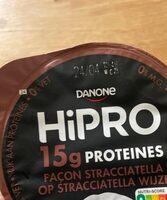 a NOVA 4
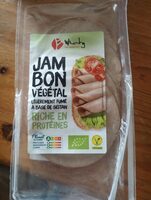 e NOVA 3
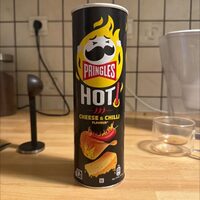 c NOVA 4
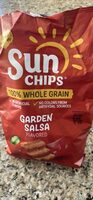 d NOVA 4
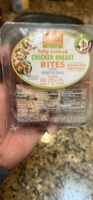 d NOVA 4
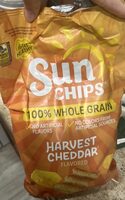 d NOVA 4
 e NOVA 3
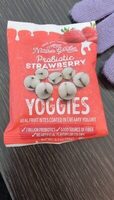 e NOVA 4
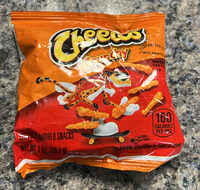 e NOVA 4
 e NOVA 4
Lactic acid-free alternatives
Popular products from the same categories that don't list Lactic acid and score Nutri-Score A–C.
 c NOVA 4
 b NOVA 3
 c NOVA 1
 c NOVA 3
 c NOVA 3
How to spot Lactic acid on a label
Look for any of these names in the ingredient list:
Related additives
Frequently asked questions
Is lactic acid dairy? Is it vegan?
The acid itself is not a dairy ingredient — it contains no milk protein and no lactose, and the name is about chemistry, not about milk. The honest complication is that US regulation lists lactose among the carbohydrates that can be fermented to produce it, and the label does not have to say which substrate was used. For a milk allergy, the protection is allergen labelling, which requires a milk allergen to be named. For a strict vegan diet, the manufacturer is the only way to be sure.
Is lactic acid bad for you?
Regulators treat it as very low concern. The WHO/FAO expert committee set an acceptable daily intake of "not limited," and the US affirms it as GRAS with no numerical ceiling. It is the same acid that makes yogurt and sourdough sour, and human metabolism handles the main form routinely.
Why is lactic acid not allowed in baby formula?
US regulation permits it in food "except in infant foods and infant formulas." The reason, as JECFA put it, is that there is evidence babies in their first three months have difficulty utilising the D(-) and DL forms — the mirror image of the form human enzymes are built around, and a mixture of the two. It is a metabolic limitation in newborns, not a toxic effect, and it does not apply to older children or adults.
Is the lactic acid in food the same as lactic acid in muscles?
It is the same molecule but an entirely unrelated situation. The lactate your muscles produce under heavy effort comes from your own metabolism; eating an acidulant in a dressing or a cured sausage has no bearing on it, and no connection to muscle soreness.
How much lactic acid is safe per day?
No numerical limit has been set. JECFA's acceptable daily intake is "not limited," which is the category used for substances of very low toxicity where a number would serve no purpose, and the US regulation sets no levels either — only good manufacturing practice.
Is lactic acid banned anywhere?
Not that we could find. It is permitted in the US, the EU and the UK. The only restriction we located anywhere is the US exclusion from infant foods and infant formulas.
What foods contain added lactic acid?
Cured and processed meats, olives and pickles, cheese and dairy products, beverages and sports drinks, dressings and sauces, confectionery, packaged salads and prepared foods — anywhere a mild sourness, a stable pH or a brake on spoilage bacteria is wanted. It also occurs naturally in anything fermented by lactic acid bacteria. See the products and categories above for what is in our database.
Sources & references
- 21 CFR 184.1061 — Lactic acid (affirmed GRAS, except in infant foods and infant formulas)
- JECFA — Lactic acid, evaluations database (ADI "not limited," 1973; flavouring agent review, 2001)
- JECFA — Lactic acid and its ammonium, calcium, potassium and sodium salts. WHO Food Additives Series 5 (1974)
- UK Government — Approved additives and E numbers
- U.S. FDA — List of Select Chemicals in the Food Supply Under FDA Review
- Commission Delegated Regulation (EU) 2016/127 — infant formula and follow-on formula
Product data: Open Food Facts (ODbL), updated daily. Additive information is for general education and is not medical advice. Always check the package label. Our methodology.