
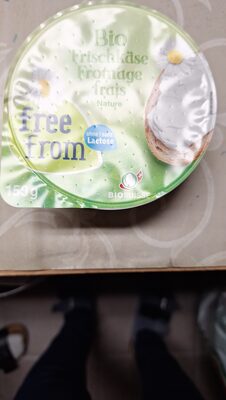
View full-size photo · Photo: Open Food Facts contributors, CC BY-SA
Bio Frischkäse
Bio Frischkäse provides 224 kcal per 100 g, with 2.9 g of sugars and 5.8 g of protein. That is 21% less sugar than the average product in this category. Its Nutri-Score is D and it is classified as NOVA 4 (ultra-processed food). It is listed in the Fresh cheeses category. Contains: milk.
Nutrient levels per 100 g
Levels use UK front-of-pack reference thresholds.
Nutrition facts
Serving size: 30g
| Nutrient | Per 100 g | Per serving | % DV* | Category avg |
|---|---|---|---|---|
| Calories | 224 kcal | 67 kcal | 184 +22% | |
| Total fat | 21 g | 6.3 g | 8% | 13.8 +52% |
| Saturated fat | 12 g | 3.6 g | 18% | 9 +34% |
| Carbohydrates | 2.9 g | 0.9 g | 0% | 4.4 −34% |
| Total sugars | 2.9 g | 0.9 g | 3.6 −21% | |
| Added sugars | 0 g | 0 g | 0% | 0.9 −100% |
| Dietary fiber | 0 g | 0 g | 0% | 0.2 −100% |
| Protein | 5.8 g | 1.7 g | 3% | 10.7 −46% |
| Salt | 0.5 g | 0.2 g | 0.8 −34% |
*% Daily Value for a serving, based on a 2,000-calorie diet (FDA reference values). Category average across 572 Fresh cheeses products on Foodmetria.
Compared with other fresh cheeses
Bar shows the share of products in this category that contain less of the nutrient.
Ingredients
Vollmilch (homogenisiert, pasteurisiert [Schweiz]), Rahm (homogenisiert, pasteurisiert [Schweiz), Kochsalz jodiert, Milchprotein (Schweiz), Magermilchpulver (Schweiz), Lactase. Alle landwirt schaftlichen Zutaten stammen aus biologischer Produktion. Ingrédients: lait entier (homogénéisé, pasteurisé [Suisse]), crème (homogénéisée, pasteurisée [Suisse]), sel de cuisine iodé, protéines lactiques (Suisse), lait écrémé en poudre (Suisse), lactase. Tous les ingrédients agricoles sont issus de la production biologique. Ingredienti: latte intero (omogeneizzato, pastorizzato [Svizzera]), panna (omogeneizzata, pastorizzata [Svizzera), sale da cucina iodato, proteine del latte (Svizzera), latte magro in polvere (Svizzera), lattasi Bei höchstens 5°C aufbewahren. Nach dem Öffnen innert 5 Tagen konsumieren. Conserver à 5°C au maximum. Après ouverture, à consommer dans les 5 jours. Conservare a 5°C al massimo. Una volta aperto, consumare entro 5 giorni. Serviervorschlag OKnospe-Lizenznehmer/Hersteller: Neue Napfmilch AG, CH-6133, Hergiswil am Napf Bio-Zertifizierung: CH-BIO-006 SERVICE ALLERG zu
- Allergens
- Milk
Product details
- Serving size
- 30g
- Labels & certifications
- OrganicEU OrganicBio SuisseCH-BIO-006No lactose
- Sold in
- Germany
- Barcode
- 7627536437976
Prices reported by shoppers
Loading prices…
Frequently asked questions
How many calories are in Bio Frischkäse?
Bio Frischkäse contains 224 kcal per 100 g and about 67 kcal per serving (30g).
How much sugar is in Bio Frischkäse?
Bio Frischkäse has 2.9 g of sugars per 100 g, which is considered low by UK front-of-pack guidelines.
Is Bio Frischkäse healthy?
It has a Nutri-Score of D (A is best, E is worst); it is in NOVA group 4 — ultra-processed food. Scores describe nutritional quality and processing, not suitability for your individual diet.
Is Bio Frischkäse vegan?
Based on its ingredient list, it is not vegan.
What allergens does Bio Frischkäse contain?
According to the label data it contains: Milk. Recipes change — always check the package label.
Source: Open Food Facts (ODbL). Last updated May 31, 2026. Spotted a mistake? Edit this product on Open Food Facts. Not medical advice — always check the package label.
Reviews
Compare & rankings
Healthier alternatives
Best in category →Same category, meaningfully better on at least one measure and no worse on the others. Each card shows what improves.
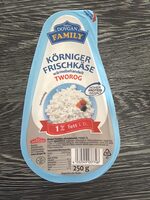 a NOVA 3
 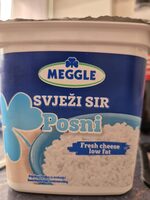 a NOVA 3
 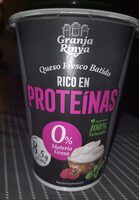 a NOVA 3
 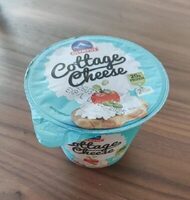 a NOVA 4
 More fresh cheeses
View all →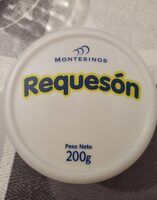 c NOVA 3
 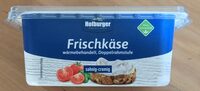 d NOVA 3
 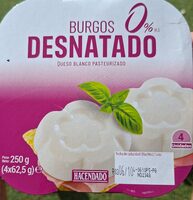 b NOVA 4
  c
c  c NOVA 3
  c NOVA 3