
Włoszczyzna vs Suppengemüse
Neither product is clearly better overall — it depends on what matters most to you.
Nutrition per 100 g
| Nutrient | Włoszczyzna | Suppengemüse |
|---|---|---|
| Nutri-Score | a | a |
| NOVA group | 1 | 1 |
| Calories | 352 kcal | 55 kcal |
| Fat | 0.9 g | 0.6 g |
| Saturated fat | 0.1 g | 0.2 g |
| Sugars | 0.9 g | 5.1 g |
| Salt | 0 g | 0.1 g |
| Fiber | 3 g | — |
| Protein | 10.3 g | 2.3 g |
| Additives | 0 | 0 |
| Allergens | Celery, Seler | Celery |
Green = better value for that nutrient (less sugar, fat, salt and calories; more fiber and protein).
Key differences
- Suppengemüse has 84% fewer calories (55 kcal vs 352 kcal).
- Suppengemüse has 33% less fat (0.6 g vs 0.9 g).
- Włoszczyzna has 82% less sugar (0.9 g vs 5.1 g).
- Włoszczyzna has 78% more protein (10.3 g vs 2.3 g).
- Only Włoszczyzna lists: Seler.
Ingredients
Włoszczyzna
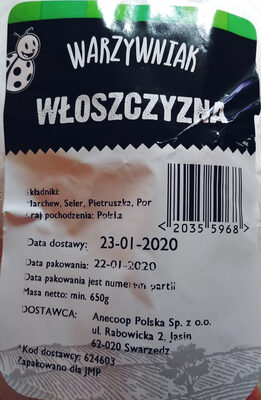
Marchew, _Seler_, Pietruszka, Por.
Suppengemüse
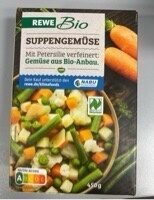
Karotten 27%, Erbsen, Sellerie, Bohnen 8%, Porree, Weißkohl, Pastinaken, Blumenkohl, Petersilie 1,5 %. Kann Spuren von Weizen, Gerste, Soja und Milch enthalten.
FAQ
Which is healthier: Włoszczyzna or Suppengemüse?
Neither product is clearly better overall — it depends on what matters most to you. We compare Nutri-Score, processing level and seven nutrients per 100 g. Your own needs (for example low sugar or high protein) may make a different choice better for you.
Which has fewer calories?
Suppengemüse has fewer calories: 55 kcal versus 352 kcal per 100 g.
Which has less sugar?
Włoszczyzna has less sugar: 0.9 g versus 5.1 g per 100 g.