
Warcollier vs Macinato scelto equino
Overall, Macinato scelto equino has the better nutritional profile on the measures we compare. It wins on 6 of our comparison points versus 2.
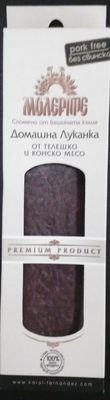
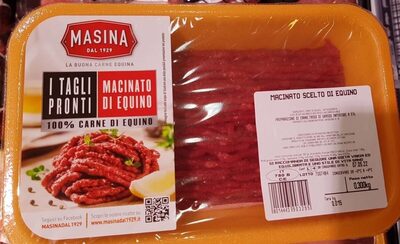
Nutrition per 100 g
| Nutrient | Warcollier | Macinato scelto equino |
|---|---|---|
| Nutri-Score | e | b |
| NOVA group | 4 | 4 |
| Calories | 365 kcal | 108 kcal |
| Fat | 22.5 g | 1.9 g |
| Saturated fat | 9.2 g | 0.8 g |
| Sugars | 0.7 g | 1.2 g |
| Salt | 4.6 g | 0.6 g |
| Fiber | — | 0 g |
| Protein | 38.8 g | 21 g |
| Additives | 1 | 1 |
| Allergens | Gluten | None listed |
Green = better value for that nutrient (less sugar, fat, salt and calories; more fiber and protein).
Key differences
- Macinato scelto equino has 70% fewer calories (108 kcal vs 365 kcal).
- Macinato scelto equino has 92% less fat (1.9 g vs 22.5 g).
- Macinato scelto equino has 92% less saturated fat (0.8 g vs 9.2 g).
- Warcollier has 42% less sugar (0.7 g vs 1.2 g).
- Macinato scelto equino has 87% less salt (0.6 g vs 4.6 g).
- Warcollier has 46% more protein (38.8 g vs 21 g).
- Macinato scelto equino has the better Nutri-Score.
- Only Warcollier lists: Gluten.
Ingredients
Warcollier
lukanka from veal , horse meat ingredients: dry salami, made by 50% veal and 50% horse meat, salt, sugar, natural spices, preservative-rosemary extract and potassium nitrate, antioxidant - ascorbic acid, natural product free of gmo, gluten and meat substitutes, 100g ready product are made by 182g fresh meat, casing-inedible, storage conditions: 0° 8°c
Macinato scelto equino
Carne di cavallo, antiossidante: E300, acido ascorbico, destrosio, saccarosio, sale.
FAQ
Which is healthier: Warcollier or Macinato scelto equino?
Overall, Macinato scelto equino has the better nutritional profile on the measures we compare. We compare Nutri-Score, processing level and seven nutrients per 100 g. Your own needs (for example low sugar or high protein) may make a different choice better for you.
Which has fewer calories?
Macinato scelto equino has fewer calories: 108 kcal versus 365 kcal per 100 g.
Which has less sugar?
Warcollier has less sugar: 0.7 g versus 1.2 g per 100 g.