
Wafle kukurydziane z ziołami prowansalskimi vs Corn cakes with millet groats and pepper
Overall, Corn cakes with millet groats and pepper has the better nutritional profile on the measures we compare. It wins on 2 of our comparison points versus 1.
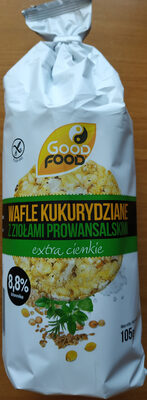
Wafle kukurydziane z ziołami prowansalskimi
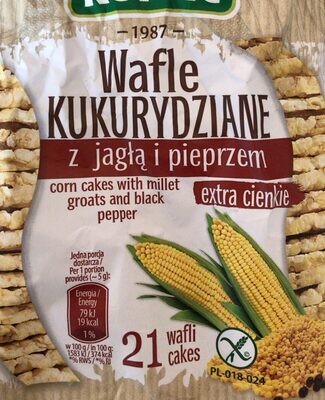
Corn cakes with millet groats and pepper
Nutrition per 100 g
| Nutrient | Wafle kukurydziane z ziołami... | Corn cakes with millet groat... |
|---|---|---|
| Nutri-Score | a | a |
| NOVA group | 3 | — |
| Calories | 379 kcal | 382 kcal |
| Fat | 4.2 g | 3.7 g |
| Saturated fat | 0.6 g | 0.5 g |
| Sugars | 1.6 g | 0.5 g |
| Salt | 0.8 g | 0.7 g |
| Fiber | 8.1 g | 8 g |
| Protein | 10 g | 8.2 g |
| Additives | 0 | 0 |
| Allergens | None listed | None listed |
Green = better value for that nutrient (less sugar, fat, salt and calories; more fiber and protein).
Key differences
- Corn cakes with millet groats and pepper has 12% less fat (3.7 g vs 4.2 g).
- Corn cakes with millet groats and pepper has 69% less sugar (0.5 g vs 1.6 g).
- Wafle kukurydziane z ziołami prowansalskimi has 18% more protein (10 g vs 8.2 g).
Ingredients
Wafle kukurydziane z ziołami prowansalskimi
pełnoziarnista kukurydza 61%, grys kukurydziany 18%,brązowy ryż, kasza gryczana, sorgo, siemię lniane, sól morska, zioła prowansalskie 0,5%. Może zawierać _soję_, _nasiona sezamu_.
Corn cakes with millet groats and pepper
Grys kukurydziany 69,4%, kukurydza pełnoziarnista, kasza jaglana 7%, olej słonecznikowy, sól morska, pieprz czarny mielony 0,15%, emulgator: lecytyny (ze słonecznika). Produkt może zawierać sezam. Produkt bezglutenowe.
FAQ
Which is healthier: Wafle kukurydziane z ziołami prowansalskimi or Corn cakes with millet groats and pepper?
Overall, Corn cakes with millet groats and pepper has the better nutritional profile on the measures we compare. We compare Nutri-Score, processing level and seven nutrients per 100 g. Your own needs (for example low sugar or high protein) may make a different choice better for you.
Which has fewer calories?
Wafle kukurydziane z ziołami prowansalskimi has fewer calories: 379 kcal versus 382 kcal per 100 g.
Which has less sugar?
Corn cakes with millet groats and pepper has less sugar: 0.5 g versus 1.6 g per 100 g.