
Sødergården vs Tesco Salted Spreadable
Overall, Sødergården has the better nutritional profile on the measures we compare. It wins on 5 of our comparison points versus 2.
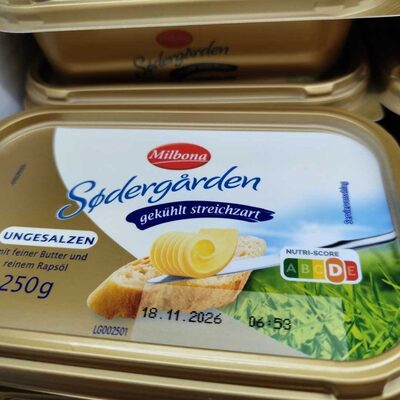
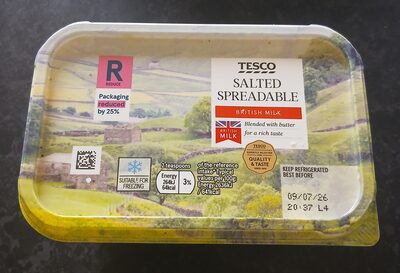
Nutrition per 100 g
| Nutrient | Sødergården | Tesco Salted Spreadable |
|---|---|---|
| Nutri-Score | d | e |
| NOVA group | 2 | 4 |
| Calories | 594 kcal | 641 kcal |
| Fat | 65 g | 77 g |
| Saturated fat | 34 g | 34.1 g |
| Sugars | 1.4 g | 0.4 g |
| Salt | 0 g | 1.1 g |
| Fiber | 0 g | 0.5 g |
| Protein | 0.8 g | 0.6 g |
| Additives | 0 | 2 |
| Allergens | None listed | Milk |
Green = better value for that nutrient (less sugar, fat, salt and calories; more fiber and protein).
Key differences
- Sødergården has 16% less fat (65 g vs 77 g).
- Tesco Salted Spreadable has 71% less sugar (0.4 g vs 1.4 g).
- Sødergården has no salt, while Tesco Salted Spreadable has 1.1 g.
- Tesco Salted Spreadable has 100% more fiber (0.5 g vs 0 g).
- Sødergården has the better Nutri-Score.
- Sødergården is less processed (lower NOVA group).
- Only Tesco Salted Spreadable lists: Milk.
Ingredients
Sødergården
63% mildgesäuerte Butter, Wasser, 13% Rapsöl, Milchsäurekulturen (enthält Milch).
Tesco Salted Spreadable
Butter (Milk) (50%), Rapeseed Oil (29%), Water, Salt (1%), Colour (Beta-Carotene). Allergy Advice For allergens, see ingredients in bold. Suitable for vegetarians STORAGE Keep refrigerated. Suitable for home freezing. Ideally freeze as soon as possible after purchase but always by 'best before' date shown. Defrost thoroughly for a minimum of 8 hours in the refrigerator. frosted, do not refreeze. 500g e GB YE031 <LOS297 S22750, S5 JPG2204574_01
FAQ
Which is healthier: Sødergården or Tesco Salted Spreadable?
Overall, Sødergården has the better nutritional profile on the measures we compare. We compare Nutri-Score, processing level and seven nutrients per 100 g. Your own needs (for example low sugar or high protein) may make a different choice better for you.
Which has fewer calories?
Sødergården has fewer calories: 594 kcal versus 641 kcal per 100 g.
Which has less sugar?
Tesco Salted Spreadable has less sugar: 0.4 g versus 1.4 g per 100 g.