
Prebiotic soda sour apple vs Fruits des bois
Overall, Prebiotic soda sour apple has the better nutritional profile on the measures we compare. It wins on 6 of our comparison points versus 0.

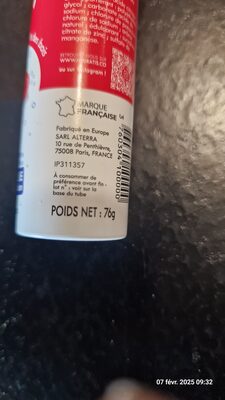
Nutrition per 100 g
| Nutrient | Prebiotic soda sour apple | Fruits des bois |
|---|---|---|
| Nutri-Score | a | e |
| NOVA group | 4 | 4 |
| Calories | 10 kcal | 267 kcal |
| Fat | 0 g | 0 g |
| Saturated fat | 0 g | 0 g |
| Sugars | 1.4 g | 48.2 g |
| Salt | 0 g | 1.6 g |
| Fiber | 0.9 g | 0 g |
| Protein | 0 g | 0 g |
| Additives | 3 | 6 |
| Allergens | None listed | None listed |
Green = better value for that nutrient (less sugar, fat, salt and calories; more fiber and protein).
Key differences
- Prebiotic soda sour apple has 96% fewer calories (10 kcal vs 267 kcal).
- Prebiotic soda sour apple has 97% less sugar (1.4 g vs 48.2 g).
- Prebiotic soda sour apple has no salt, while Fruits des bois has 1.6 g.
- Prebiotic soda sour apple has 100% more fiber (0.9 g vs 0 g).
- Prebiotic soda sour apple has the better Nutri-Score.
Ingredients
Prebiotic soda sour apple
Sparkling water, organic cane sugar, cassava root fiber, apple juice concentrate, apple cider vinegar, natural flavors, citric acid, tartaric acid, organic agave inulin, stevia leaf extract.
Fruits des bois
Dextrose monohydrate, acide citrique, bicarbonate de potassium, sels de magnésium de l'acide citrique, polyrthylenelycol, hydrogénocarbonate de sodium, chlorure de potassium, chlorure de sodium, arôme naturel, sucralose, citrate de zinc, sulfate de manganèse.
FAQ
Which is healthier: Prebiotic soda sour apple or Fruits des bois?
Overall, Prebiotic soda sour apple has the better nutritional profile on the measures we compare. We compare Nutri-Score, processing level and seven nutrients per 100 g. Your own needs (for example low sugar or high protein) may make a different choice better for you.
Which has fewer calories?
Prebiotic soda sour apple has fewer calories: 10 kcal versus 267 kcal per 100 g.
Which has less sugar?
Prebiotic soda sour apple has less sugar: 1.4 g versus 48.2 g per 100 g.