
Comparison
Mirin Saké doux pour cuisiner vs Sen
Overall, Sen has the better nutritional profile on the measures we compare. It wins on 3 of our comparison points versus 0.
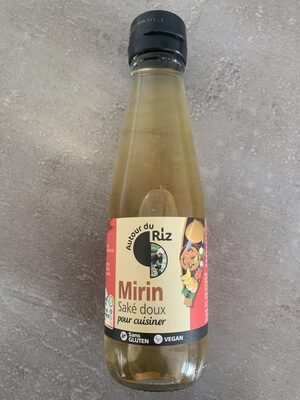
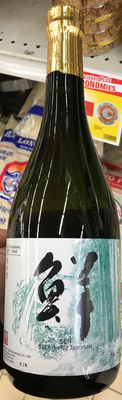
Nutrition per 100 g
| Nutrient | Mirin Saké doux pour cuisine... | Sen |
|---|---|---|
| Nutri-Score | — | — |
| NOVA group | 3 | 3 |
| Calories | 146 kcal | 87 kcal |
| Fat | 0 g | 0.2 g |
| Saturated fat | 0 g | 0 g |
| Sugars | 28 g | 0 g |
| Salt | — | 0 g |
| Fiber | 0 g | 0.3 g |
| Protein | 0.7 g | 1.8 g |
| Additives | 0 | 0 |
| Allergens | None listed | None listed |
Green = better value for that nutrient (less sugar, fat, salt and calories; more fiber and protein).
Key differences
- Sen has 40% fewer calories (87 kcal vs 146 kcal).
- Sen has 100% less sugar (0 g vs 28 g).
- Sen has 60% more protein (1.8 g vs 0.7 g).
Ingredients
Mirin Saké doux pour cuisiner
Vin de riz* 62,5 % (eau, riz, koji, alcool), eau, sucre de canne*.
Sen
Eau, riz.
FAQ
Which is healthier: Mirin Saké doux pour cuisiner or Sen?
Overall, Sen has the better nutritional profile on the measures we compare. We compare Nutri-Score, processing level and seven nutrients per 100 g. Your own needs (for example low sugar or high protein) may make a different choice better for you.
Which has fewer calories?
Sen has fewer calories: 87 kcal versus 146 kcal per 100 g.
Which has less sugar?
Sen has less sugar: 0 g versus 28 g per 100 g.
More comparisons
Sake de cuisine vs Sen
Saké pour cuisine vs Sen
Mirin Saké doux pour cui... vs Sake organic
Mirin Saké doux pour cui... vs Saké pour cuisine
Mirin Saké doux pour cui... vs Sake de cuisine
Midai Sake De Cuisine 30... vs Mirin Saké doux pour cui...
Mirin Saké doux pour cui... vs Hakutsuru Draft Sake
Mirin Saké doux pour cui... vs Saké pétillant en Gelée...