
Lemon lime vs Freeway Tropical Crush 330ml can
Neither product is clearly better overall — it depends on what matters most to you.
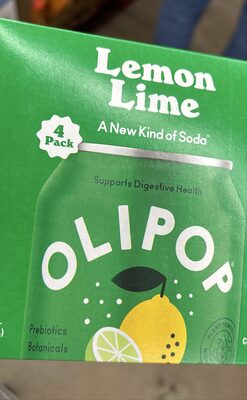
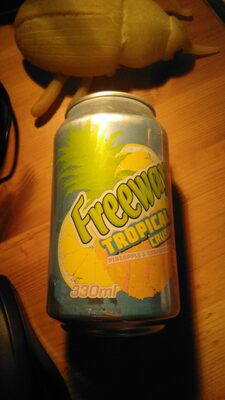
Nutrition per 100 ml
| Nutrient | Lemon lime | Freeway Tropical Crush 330ml... |
|---|---|---|
| Nutri-Score | b | c |
| NOVA group | 4 | 4 |
| Calories | 13 kcal | 4 kcal |
| Fat | 0 g | 0 g |
| Saturated fat | 0 g | — |
| Sugars | 1.4 g | 0.5 g |
| Salt | 0 g | 0 g |
| Fiber | 1.7 g | — |
| Protein | 0 g | 0 g |
| Additives | 0 | 9 |
| Allergens | None listed | Phenylalmine |
Green = better value for that nutrient (less sugar, fat, salt and calories; more fiber and protein).
Key differences
- Freeway Tropical Crush 330ml can has 70% fewer calories (4 kcal vs 13 kcal).
- Freeway Tropical Crush 330ml can has 65% less sugar (0.5 g vs 1.4 g).
- Lemon lime has the better Nutri-Score.
- Only Freeway Tropical Crush 330ml can lists: Phenylalmine.
Ingredients
Lemon lime
Carbonated Water, OLISMART (Cassava Root Fiber, Acacia Fiber, Guar Fiber, Nopal Cactus, Marshmallow Root, Calendula Flower, Kudzu Root), Quince Juice Concentrate, Lemon Juice, Apple Juice Concentrate, Cassava Root Syrup, Key Lime Juice Concentrate, Stevia Leaf, Himalayan Pink Salt, Natural Key Lime Flavor.
Freeway Tropical Crush 330ml can
Carbonated Water, Pineapple Juice from Concentrate (3%), Grapefruit Juice from Concentrate (2%), Acidifier; Citric Acid, Sweeteners; Acesulfame K, Aspartame, Natural Flavouring, Presevative; Potassium Sorbate, Acidity Regulator; Sodium Citrate, Antioxident; Asorbic Acid, Stabilisers; Gum Arabic, Guar Gum, Glycerol Esters of Wood Rosins, Colour; Carotenes.
FAQ
Which is healthier: Lemon lime or Freeway Tropical Crush 330ml can?
Neither product is clearly better overall — it depends on what matters most to you. We compare Nutri-Score, processing level and seven nutrients per 100 g. Your own needs (for example low sugar or high protein) may make a different choice better for you.
Which has fewer calories?
Freeway Tropical Crush 330ml can has fewer calories: 4 kcal versus 13 kcal per 100 g.
Which has less sugar?
Freeway Tropical Crush 330ml can has less sugar: 0.5 g versus 1.4 g per 100 g.