
ISOSTAR powertabs lemon vs Haar Vitamines
Overall, Haar Vitamines has the better nutritional profile on the measures we compare. It wins on 2 of our comparison points versus 0.
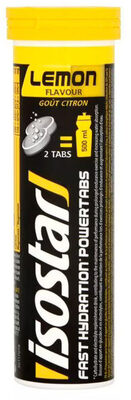
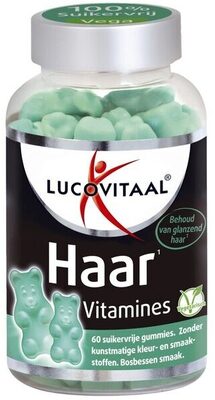
Nutrition per 100 g
| Nutrient | ISOSTAR powertabs lemon | Haar Vitamines |
|---|---|---|
| Nutri-Score | e | — |
| NOVA group | 4 | 4 |
| Calories | 358 kcal | 360 kcal |
| Fat | 0 g | 0 g |
| Saturated fat | 0 g | 0 g |
| Sugars | 75 g | 0 g |
| Salt | 3.5 g | 0.3 g |
| Fiber | 0 g | 0 g |
| Protein | 0 g | 0 g |
| Additives | 1 | 7 |
| Allergens | None listed | None listed |
Green = better value for that nutrient (less sugar, fat, salt and calories; more fiber and protein).
Key differences
- Haar Vitamines has no sugar, while ISOSTAR powertabs lemon has 75 g.
- Haar Vitamines has 91% less salt (0.3 g vs 3.5 g).
Ingredients
ISOSTAR powertabs lemon
Dextrose, acidifiant: acide citrique, bicarbonate de sodium, amidon, maltodextrine, arôme naturel de citron avec autres arômes naturels (colorant : caroténoïdes), bicarbonate de potassium, carbonate de magnésium, carbonate de calcium, chlorure de sodium, sels de calcium de l'acide orthophosphorique, édulcorant : aspartame, vitamines C, E, B1.
Haar Vitamines
Zoetstoffen (Maltitolstroop, Maltitol), Gezuiverd water, Calcium, Verdikkingsmiddel (Pectine), Vulmiddel (Natrium hexametafosfaat, Citroenzuur, Trinatriumcitraat), Vitamine C, Vitamine E, Smaakstoffen (DL-Appelzuur, Frambozen aroma, Blauwe bessen aroma), Glansmiddel (Carnaubawas, Plantaardige olie), Vitamine A, Zink, Vitamine B5, Vitamine D, Biotine, Jodium, Vitamine B6, Vitamine B12, Foliumzuur, Choline, Inositol, Kleurstoffen (Briljant blauw).
FAQ
Which is healthier: ISOSTAR powertabs lemon or Haar Vitamines?
Overall, Haar Vitamines has the better nutritional profile on the measures we compare. We compare Nutri-Score, processing level and seven nutrients per 100 g. Your own needs (for example low sugar or high protein) may make a different choice better for you.
Which has fewer calories?
ISOSTAR powertabs lemon has fewer calories: 358 kcal versus 360 kcal per 100 g.
Which has less sugar?
Haar Vitamines has less sugar: 0 g versus 75 g per 100 g.