
Haché de bœuf sauce tomate vs Haché moelleux
Overall, Haché moelleux has the better nutritional profile on the measures we compare. It wins on 6 of our comparison points versus 4.
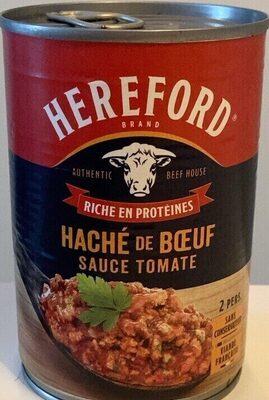
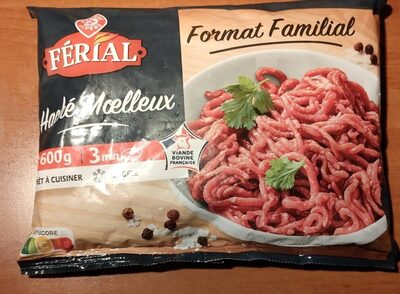
Nutrition per 100 g
| Nutrient | Haché de bœuf sauce tomate | Haché moelleux |
|---|---|---|
| Nutri-Score | c | b |
| NOVA group | 3 | 4 |
| Calories | 100 kcal | 201 kcal |
| Fat | 4.3 g | 15 g |
| Saturated fat | 1.7 g | 4.7 g |
| Sugars | 1.9 g | 0.3 g |
| Salt | 0.8 g | 0.5 g |
| Fiber | 0.9 g | 1.7 g |
| Protein | 9.5 g | 15 g |
| Additives | 0 | 0 |
| Allergens | None listed | None listed |
Green = better value for that nutrient (less sugar, fat, salt and calories; more fiber and protein).
Key differences
- Haché de bœuf sauce tomate has 50% fewer calories (100 kcal vs 201 kcal).
- Haché de bœuf sauce tomate has 71% less fat (4.3 g vs 15 g).
- Haché de bœuf sauce tomate has 64% less saturated fat (1.7 g vs 4.7 g).
- Haché moelleux has 84% less sugar (0.3 g vs 1.9 g).
- Haché moelleux has 37% less salt (0.5 g vs 0.8 g).
- Haché moelleux has 47% more fiber (1.7 g vs 0.9 g).
- Haché moelleux has 37% more protein (15 g vs 9.5 g).
- Haché moelleux has the better Nutri-Score.
- Haché de bœuf sauce tomate is less processed (lower NOVA group).
Ingredients
Haché de bœuf sauce tomate
Tomates concassées, viande de boeuf, eau, concentré de tomates, chapelure, plantes aromatiques, sel, amidon, sucre
Haché moelleux
INGRÉDIENTS Viande de boeuf (origine: France) 75 %, eau, fibres végétales 1,4 %, (bambou, pois), sel, arôme naturel, amidon de pois, poudre de betterave rouge, farine de lin, Traces de céleri, gluten, moutarde, soja,
FAQ
Which is healthier: Haché de bœuf sauce tomate or Haché moelleux?
Overall, Haché moelleux has the better nutritional profile on the measures we compare. We compare Nutri-Score, processing level and seven nutrients per 100 g. Your own needs (for example low sugar or high protein) may make a different choice better for you.
Which has fewer calories?
Haché de bœuf sauce tomate has fewer calories: 100 kcal versus 201 kcal per 100 g.
Which has less sugar?
Haché moelleux has less sugar: 0.3 g versus 1.9 g per 100 g.