
Extended life rapeseed oil vs Rice Bran Oil
Overall, Rice Bran Oil has the better nutritional profile on the measures we compare. It wins on 2 of our comparison points versus 1.
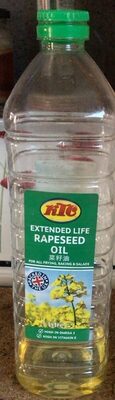
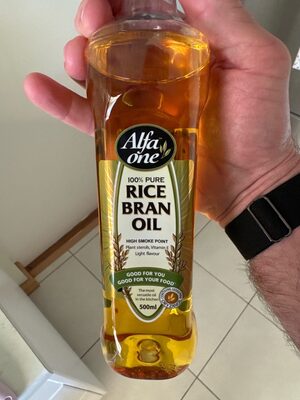
Nutrition per 100 g
| Nutrient | Extended life rapeseed oil | Rice Bran Oil |
|---|---|---|
| Nutri-Score | c | c |
| NOVA group | 4 | 2 |
| Calories | 899 kcal | 900 kcal |
| Fat | 95 g | 100 g |
| Saturated fat | 6.6 g | 22 g |
| Sugars | 0 g | 0 g |
| Salt | 0.5 g | 0 g |
| Fiber | — | 0 g |
| Protein | 0 g | 0 g |
| Additives | 2 | 0 |
| Allergens | None listed | None listed |
Green = better value for that nutrient (less sugar, fat, salt and calories; more fiber and protein).
Key differences
- Extended life rapeseed oil has 70% less saturated fat (6.6 g vs 22 g).
- Rice Bran Oil has no salt, while Extended life rapeseed oil has 0.5 g.
- Rice Bran Oil is less processed (lower NOVA group).
Ingredients
Extended life rapeseed oil
Rapeseed Oil, Anti-Foaming Agent: E900. Suitable for Vegetarians. Storage Condition: Store at ambient temperatures off the floor in a clean dry area. Keep away from odorous materials and direct sunlight. Safety Information: Do not stand bottle on hot surfaces. Do not return hot oil into the container. Keep and store upright. Best Before End: See cap KTC (Edibles) Ltd, Moorcroft Drive, WS10 7DE, U.K Tel: +44 (0)121 505 9200 Email: [email protected] EU Office: KTC (Edibles) Ltd, K LBD Hullenbergweg 278-308, 1101BV Amsterdam, Zuid-Oost, Netherlands. Email: [email protected] www.ktc-edibles.co.uk ree
Rice Bran Oil
Rice Bran Oil
FAQ
Which is healthier: Extended life rapeseed oil or Rice Bran Oil?
Overall, Rice Bran Oil has the better nutritional profile on the measures we compare. We compare Nutri-Score, processing level and seven nutrients per 100 g. Your own needs (for example low sugar or high protein) may make a different choice better for you.
Which has fewer calories?
Extended life rapeseed oil has fewer calories: 899 kcal versus 900 kcal per 100 g.
Which has less sugar?
Extended life rapeseed oil has less sugar: 0 g versus 0 g per 100 g.